Fruit coloring pages are one of my favorite low-pressure ways to make an ordinary afternoon feel a little more creative. You do not need a perfectly organized craft room, a giant marker collection, or hours of free time—just choose a page, grab the supplies you already have, and start adding color.
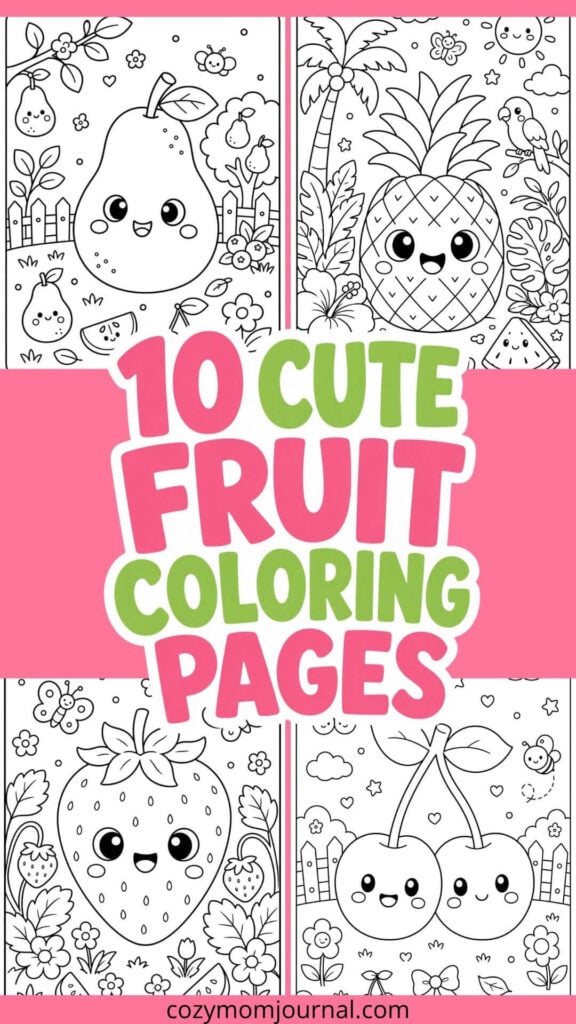
I created this collection for those moments when you want to make something cheerful but do not want a complicated project. These ten printable coloring sheets feature smiling grapes, citrus fruits, peaches, pears, berries, watermelon, apples, pineapple, and cherries, all surrounded by playful garden or tropical details.
One thing I have learned from coloring is that the blank page often looks more intimidating than the actual project. The moment I pick three or four colors and fill in the first small area, the rest becomes much easier—and usually much more fun.
So please do not worry about choosing the perfect palette. Fruit has permission to be pink, purple, blue, or sprinkled with glitter in this little world.
1. Cute Grapes in a Moonlit Vineyard Coloring Page
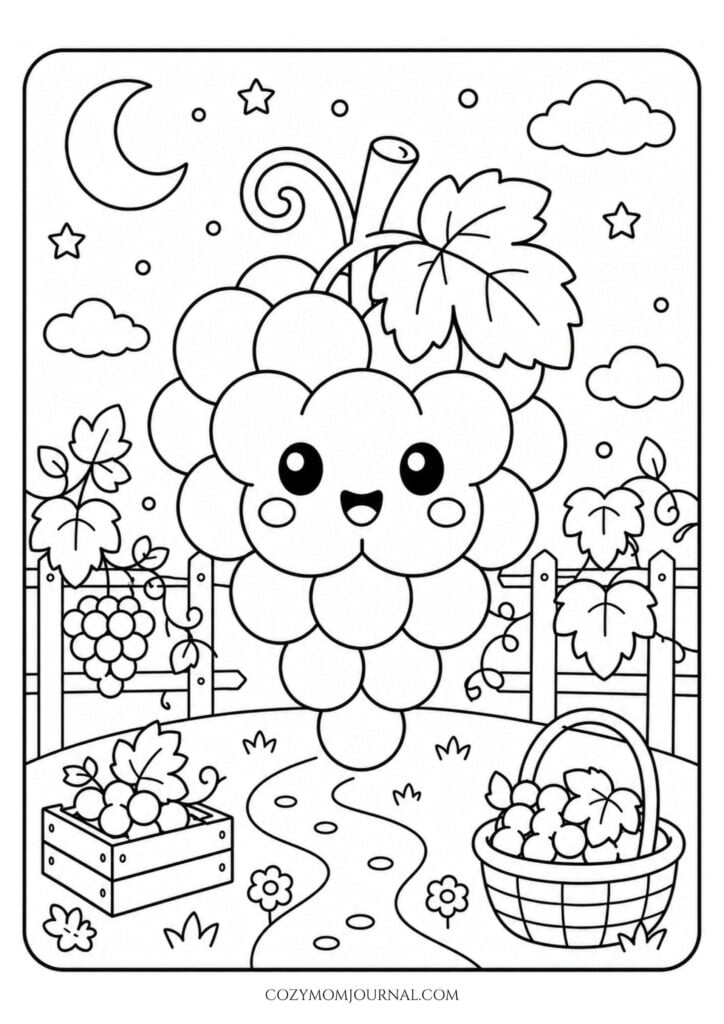
This cheerful bunch of grapes turns a peaceful vineyard into a playful nighttime scene. The smiling fruit, curling vines, tiny stars, and harvest baskets give you plenty of opportunities to combine rich colors with softer background details.
Try coloring the main grape cluster in deep purple, rosy violet, or fresh green. Use a slightly darker shade around the edges of each grape and leave a small lighter area near the center to create a rounded, juicy look.
- Choose olive, forest, and yellow-green tones for the large vine leaves.
- Color the wooden fence and crate with warm browns, tan, or honey shades.
- Add golden yellow to the moon and stars for a cozy evening glow.
- Keep the clouds pale blue, lavender, or soft gray so they do not compete with the grapes.
- Use different grape colors in the crate and basket to make the harvest scene feel more varied.
For extra depth, make the sky a gentle blue-to-purple gradient and darken the areas behind the leaves and fence. Small white gel pen highlights on the grapes can add a glossy finishing touch once the coloring is complete.
2. Cheerful Lemon Garden Coloring Page
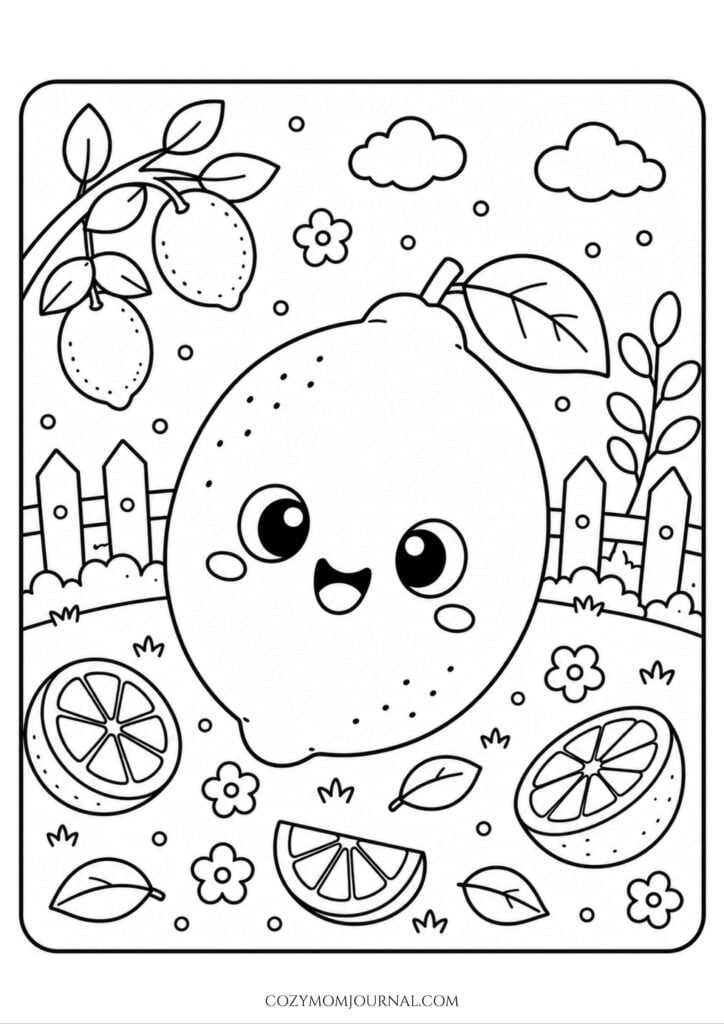
A smiling lemon takes center stage in this sunny garden scene, surrounded by citrus slices, leafy branches, tiny flowers, and a simple picket fence. The large open spaces make it easy to build smooth color, while the smaller details add enough variety to keep the page interesting.
For a classic look, use bright yellow for the whole lemon and add golden yellow around the outer edge. A soft cream highlight through the center can make the fruit appear rounder without needing heavy shading.
- Color the lemon slices with pale yellow centers and slightly deeper yellow rinds.
- Use fresh green shades for the leaves, mixing light green with olive or emerald for contrast.
- Try white, pink, or lavender flowers with warm yellow centers.
- Keep the fence light brown, white, or soft gray for a clean garden feel.
- Add pale blue to the sky and leave the clouds white, or outline them with a very light blue shadow.
A few orange-yellow dots on the peel can give the lemon a textured, realistic finish. For a softer pastel version, combine buttery yellow, mint green, blush pink, and powder blue throughout the scene.
3. Happy Orange Orchard Coloring Page
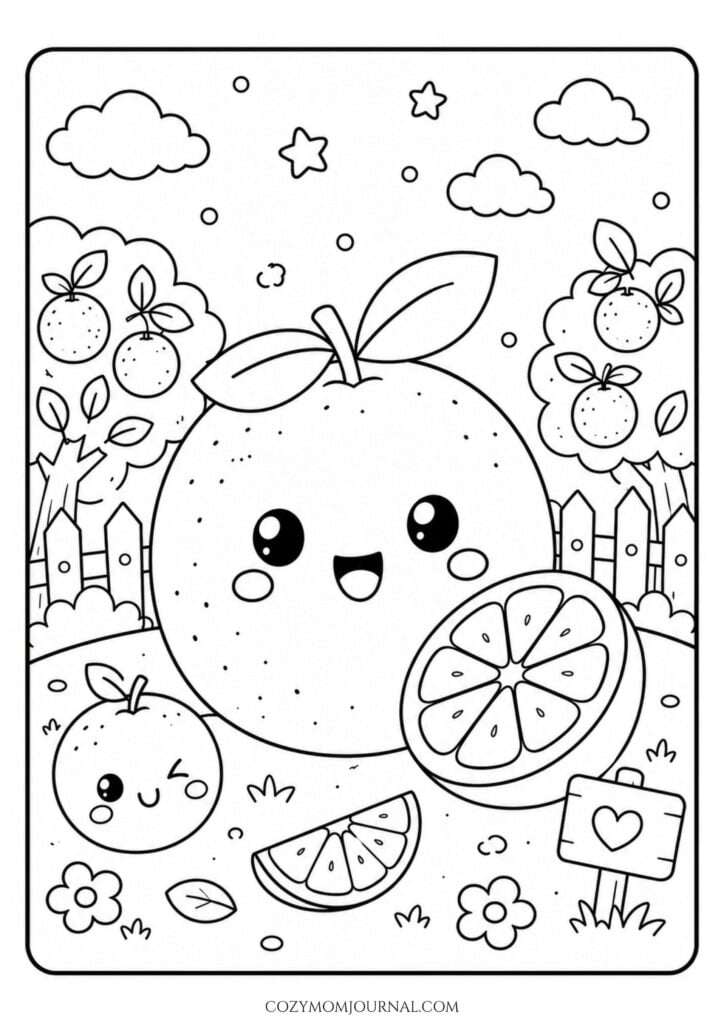
A giant smiling orange, a playful little fruit, and freshly cut citrus slices fill this orchard with cheerful energy. The fruit trees, fence, flowers, and tiny heart sign also create several smaller areas where colorists can experiment with coordinating shades.
Build the orange peel with more than one color instead of using a single flat tone. Start with light orange, blend in tangerine around the edges, and add touches of golden yellow where the light would naturally hit.
- Make the inside of the sliced orange pale yellow-orange, with darker outlines around each juicy segment.
- Combine leaf green, lime, and deep olive across the foliage to separate overlapping leaves.
- Give the distant oranges slightly softer colors so the large central fruit remains the main focus.
- Use rosy pink or peach for the cheeks and repeat that shade in the flowers or heart sign.
- Color the fence white, beige, or weathered brown, depending on whether you prefer a bright or rustic orchard.
The small dots on the peel can be emphasized with burnt orange or light brown to suggest natural citrus texture. A turquoise sky would create strong contrast with the orange fruit, while a pale peach or sunny cream background would give the entire page a warmer, more harmonious appearance.
4. Sweet Peach Garden Coloring Page
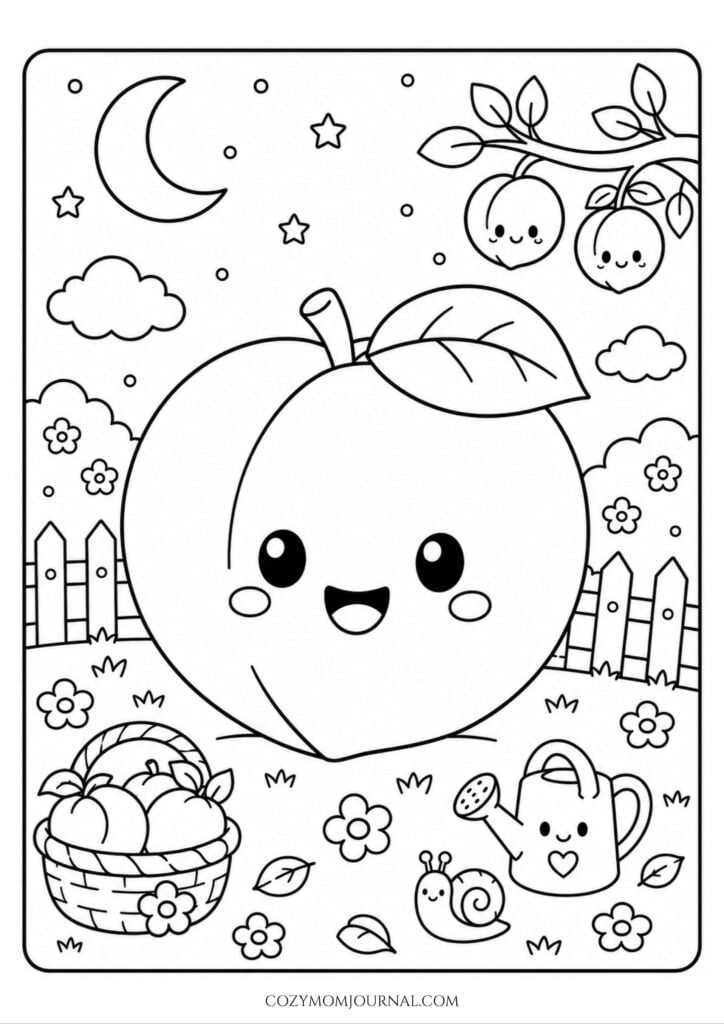
A plump, happy peach brings a gentle summer mood to this garden, complete with a harvest basket, tiny snail, watering can, flowers, and fruit hanging from the tree. The mix of large shapes and small decorative details makes it easy to create one clear focal point while still adding plenty of personality around it.
Blend pale yellow into soft peach, coral, and warm pink across the main fruit. Placing the deeper pink near one side and around the crease will help the peach look fuller and more dimensional.
- Use muted sage, fresh green, and dark olive for the leaves and bushes.
- Color the peaches in the basket with slightly different peach and apricot tones.
- Give the watering can a cheerful accent color such as turquoise, mint, lavender, or sky blue.
- Try cream and golden brown on the woven basket to show its braided texture.
- Add rosy cheeks to the fruit, snail, and watering can to connect the characters visually.
The nighttime details offer a fun contrast to the summery fruit. A deep blue or dusky lavender sky with a pale yellow moon would create a cozy evening scene, while a light blue background would keep the page bright and playful.
5. Playful Pear Orchard Coloring Page
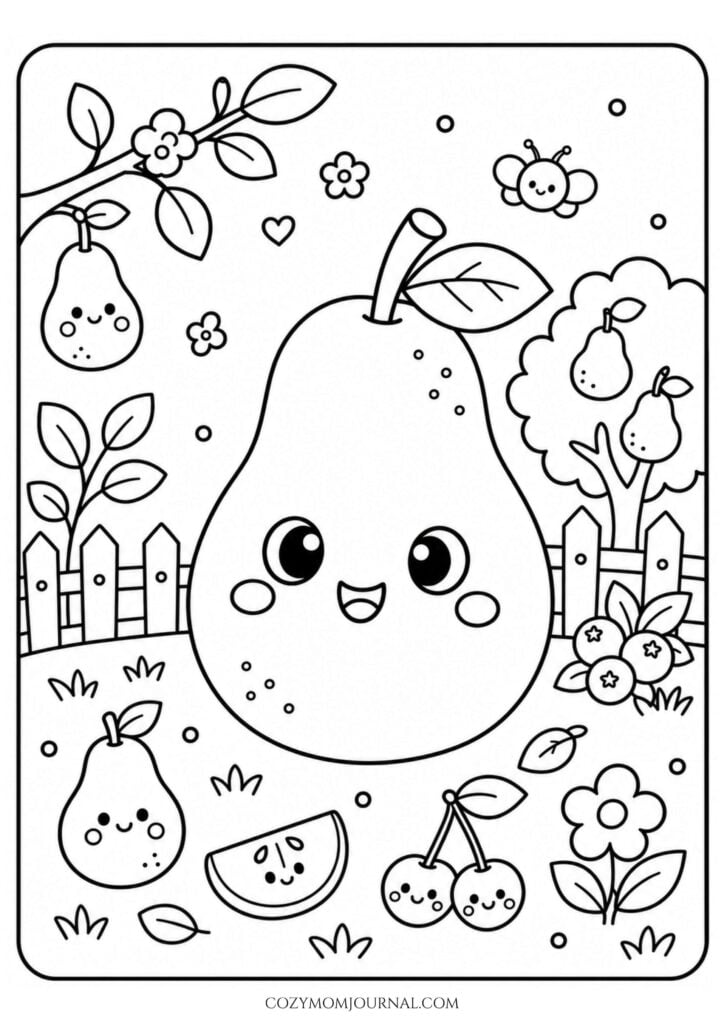
A wide-eyed pear stands among blossoming branches, tiny orchard fruits, cherries, flowers, and a friendly bee. The mix of pears with a few unexpected fruit details makes this page especially fun for experimenting with a coordinated palette rather than sticking to one realistic color scheme.
Give the large pear a smooth green-to-yellow blend, starting with light yellow near the center and adding pear green around the sides. A touch of warm brown or olive near the stem can create a naturally ripened look.
- Use darker green along one edge to suggest gentle shadow.
- Color the smaller pears in different stages of ripeness, from pale green to golden yellow.
- Make the cherries bright red, burgundy, or even deep pink for a strong accent.
- Try white blossoms with pink centers, or use soft blue and lavender for a more whimsical garden.
- Add yellow and black to the bee, keeping the wings pale blue or light gray.
The berry cluster near the fence can introduce cooler shades such as blueberry blue or purple, helping balance the warmer fruit colors. For a polished finish, repeat one accent color—such as coral, turquoise, or violet—in the cheeks, flowers, and small background details.
6. Smiling Strawberry Patch Coloring Page
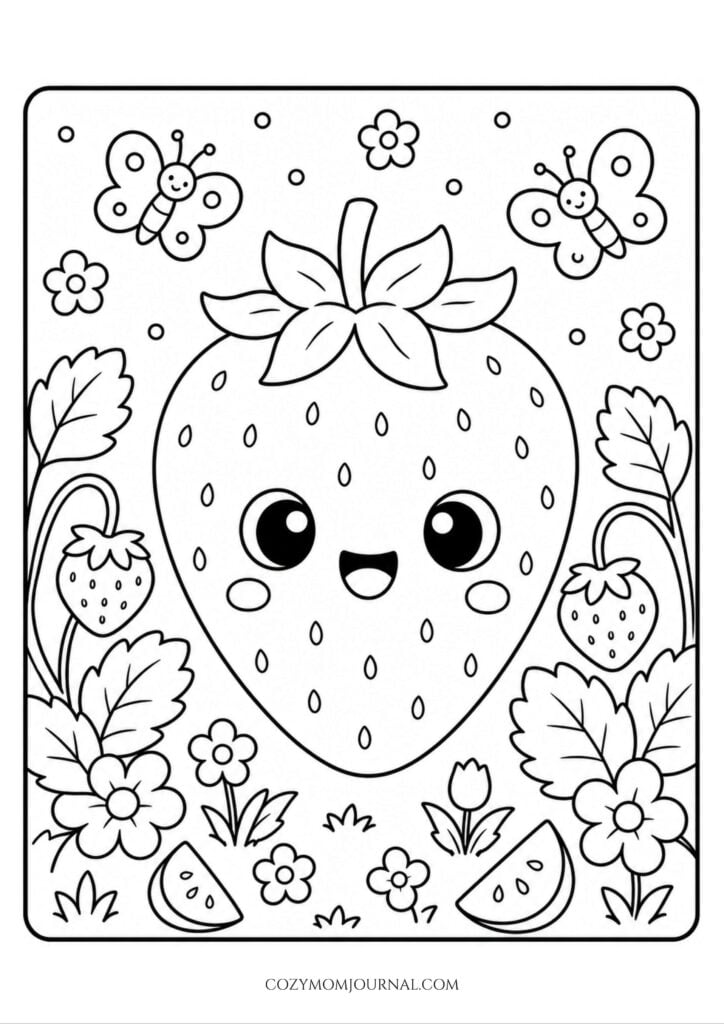
Framed by leafy plants, blossoms, fluttering butterflies, and smaller strawberries, this oversized berry makes a bright centerpiece for a cheerful garden scene. The symmetrical layout is especially satisfying to color because you can repeat shades on both sides or give each corner its own color combination.
Layer the main strawberry with scarlet, cherry red, and a little deep crimson near the outer edges. Keep a narrow section lighter to create a soft highlight, then color the seeds pale yellow, cream, or golden brown so they remain visible against the red fruit.
- Blend several greens through the leafy tops, stems, and strawberry plants instead of using one shade everywhere.
- Use darker green near the veins and lighter green toward the tips of the leaves.
- Color the smaller strawberries pink-red or coral to separate them from the central berry.
- Choose sunny yellow, lavender, blue, or peach for the butterflies and repeat those shades in the flowers.
- Add soft pink to the cheeks for an extra-sweet expression.
For more contrast, fill the background with a very pale sky blue or warm cream while keeping the larger flowers bold. Colored pencils work well for the berry’s gentle shading, while markers can make the butterflies and small blossoms look crisp and vibrant.
7. Sunny Watermelon Picnic Coloring Page
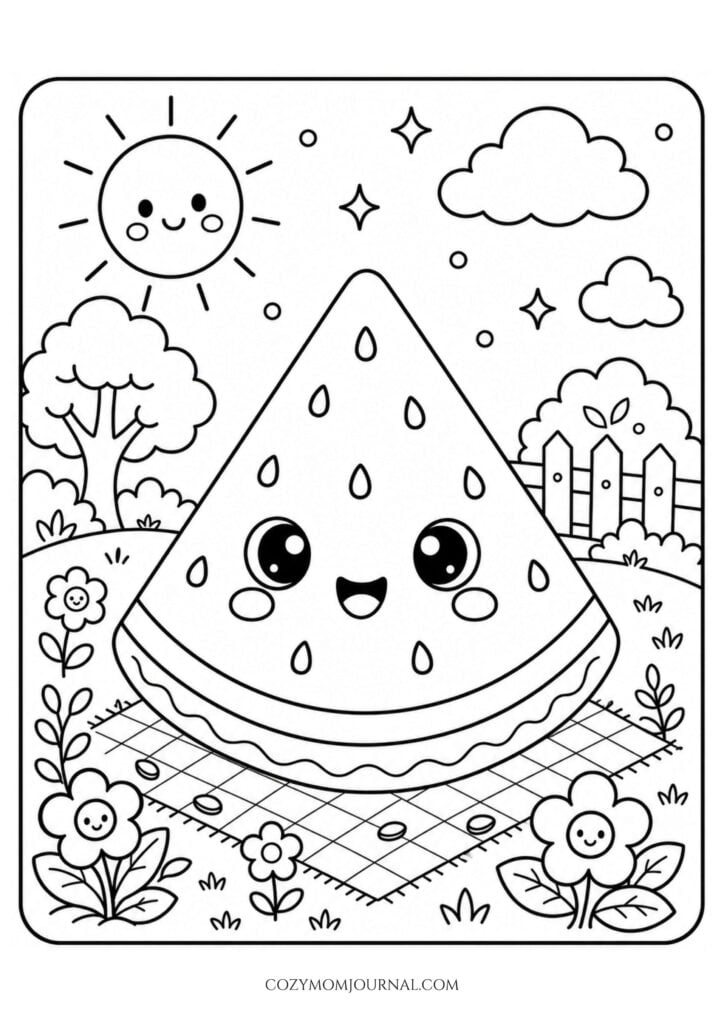
Set on a checkered picnic blanket, this smiling watermelon slice feels ready for a bright summer afternoon. The cheerful sun, fluffy clouds, garden flowers, and open grassy background leave plenty of room for both bold fruit colors and softer outdoor shades.
Use a vivid watermelon red or deep pink for the center, then add a lighter band near the rind to suggest the pale flesh beneath the skin. The outer rind can be layered with mint, grass green, and a narrow strip of darker green along the bottom edge.
- Fill the seeds with black, dark brown, or deep burgundy.
- Try alternating pale yellow and white squares on the picnic blanket for a sunny gingham pattern.
- Color the flowers in coral, purple, blue, and golden yellow to brighten the lower corners.
- Use warm yellow for the sun and add peach or pink cheeks to its face.
- Shade the grass with two or three greens, keeping the distant hills lighter than the plants in front.
A light blue sky will make the red watermelon stand out immediately. To give the slice more dimension, add slightly darker pink beneath the seeds and near the rind, then soften the transition with gentle circular pencil strokes.
8. Friendly Apple Orchard Coloring Page
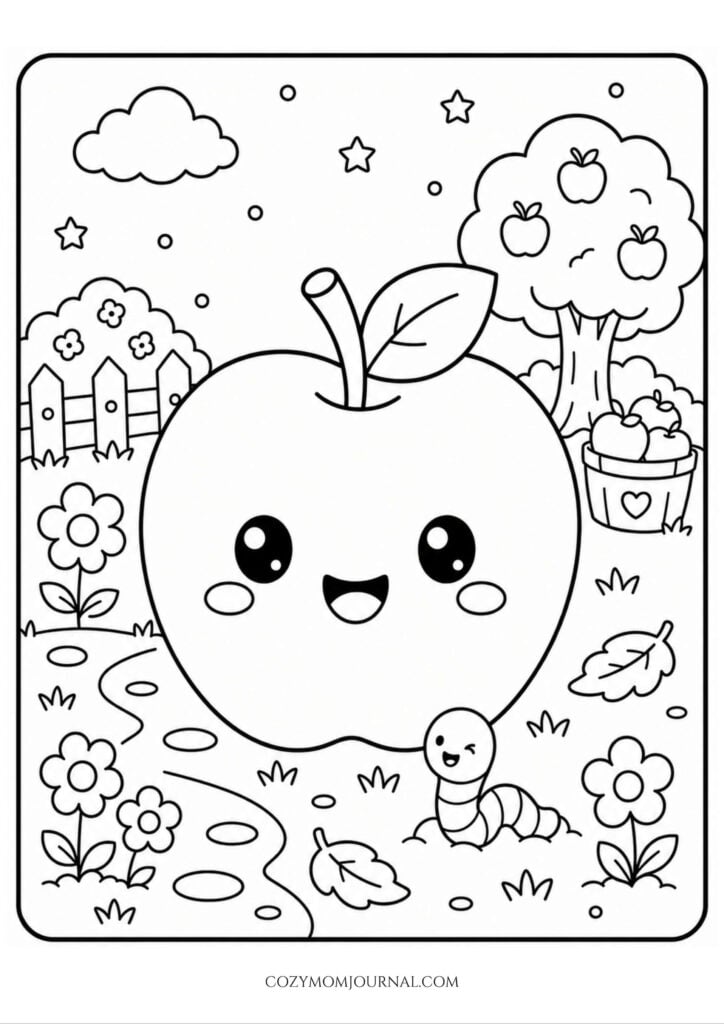
A cheerful apple, a winking garden worm, and a basket filled with freshly picked fruit create a cozy orchard scene with plenty of small details to explore. The winding path, scattered leaves, flowers, fence, and distant apple tree help the page feel lively without taking attention away from the large central character.
The main apple could be classic red, crisp green, golden yellow, or even a blend of two ripening colors. For a shiny effect, keep one curved section lighter and deepen the color near the bottom and around the stem.
- Pair a red apple with deep green leaves and warm brown branches.
- Use lighter shades on the apples in the background so they appear farther away.
- Color the worm in soft green, yellow, or peach, with alternating bands for a playful look.
- Give the path a sandy beige or pale gray tone, adding slightly darker color around the stepping stones.
- Choose a repeating flower palette, such as yellow and lavender or pink and blue, to keep the garden visually balanced.
The fallen leaves can hint at late summer or early fall with green, gold, and rusty orange. For an extra orchard detail, shade the wooden basket with short strokes that follow the direction of the slats, making the container look textured rather than flat.
9. Tropical Pineapple Paradise Coloring Page
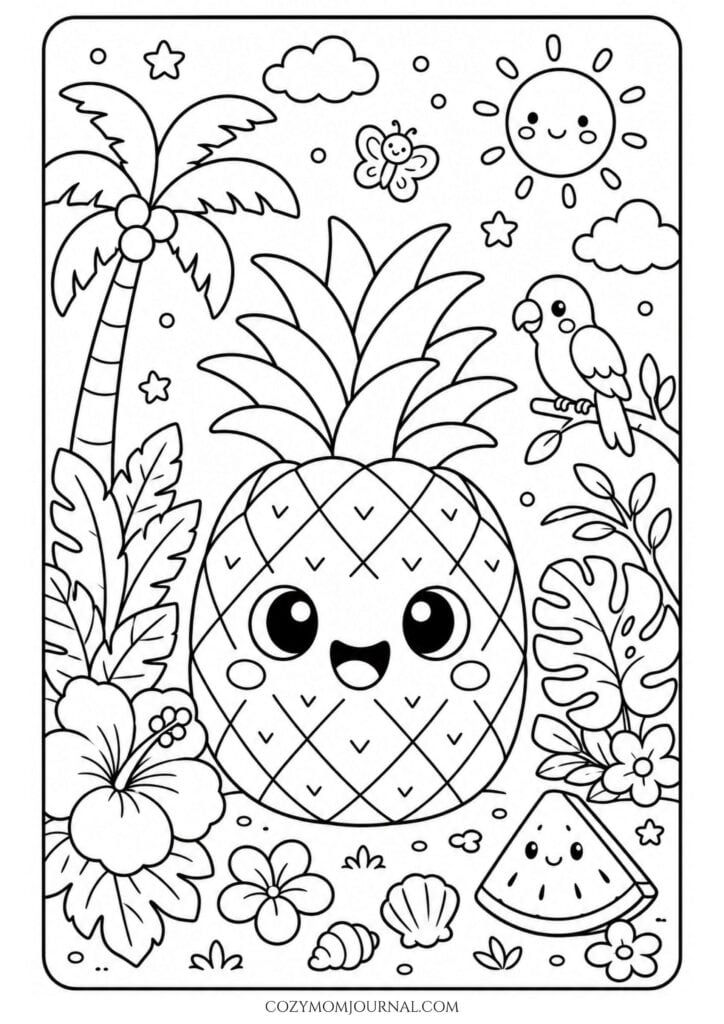
Bold tropical leaves, hibiscus flowers, a curious parrot, and a swaying palm tree turn this smiling pineapple into a lively island centerpiece. The diamond pattern on the fruit is perfect for practicing color variation without making the design feel too busy.
Start with golden yellow across the pineapple, then add amber or light brown along the lower edges of each diamond. Keeping the centers slightly lighter will help the textured surface look rounded and sunlit.
- Color the crown with several greens, from lime at the tips to deep emerald near the base.
- Use coral, magenta, or warm red for the hibiscus flowers, with golden centers.
- Give the parrot a bright tropical palette, such as green, turquoise, yellow, and orange.
- Shade the palm trunk with tan and cocoa brown, adding darker bands for texture.
- Try aqua, teal, and leafy green for the surrounding foliage to create more depth.
The tiny watermelon slice can act as a playful accent in pink-red and fresh green. Finish the scene with a pale turquoise sky, buttery yellow sun, and a few soft shadows beneath the pineapple and plants to ground everything on the page.
10. Adorable Cherry Pair Coloring Page
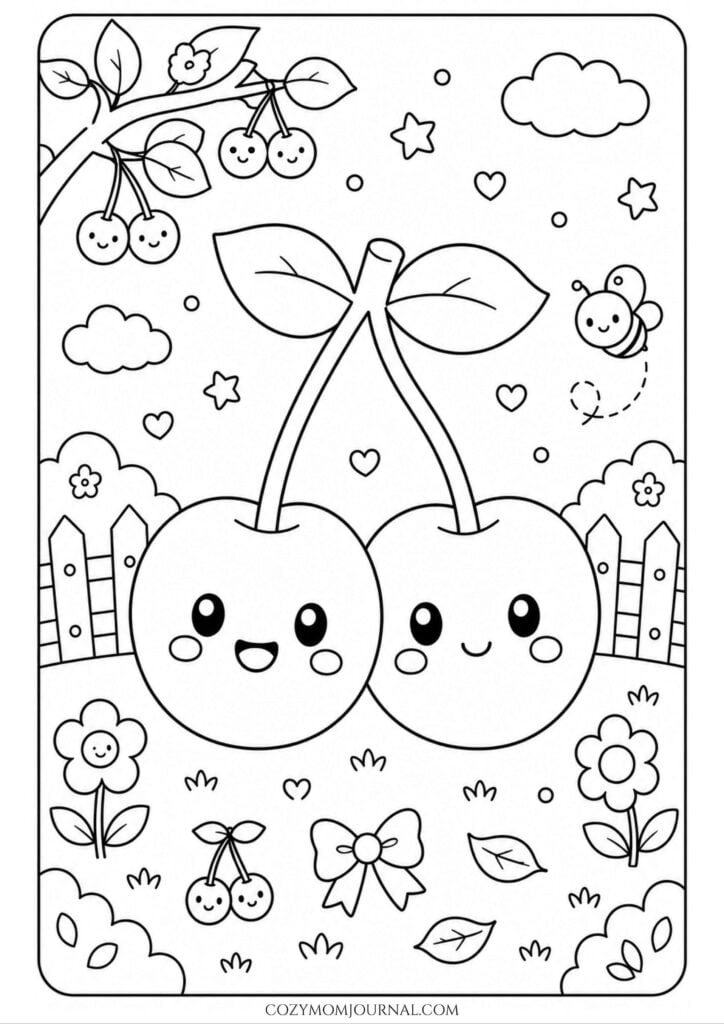
Two happy cherries sit side by side in a sweet garden filled with blossoms, leafy branches, tiny hearts, and a buzzing bee. Their connected stems and oversized leaves make the pair feel like the clear centerpiece, while the smaller cherries add playful repetition throughout the scene.
For the main fruit, combine bright cherry red with deeper crimson or burgundy near the edges. Leave a small curved highlight uncolored, or blend in a touch of pink, to give each cherry a smooth, glossy finish.
- Use fresh green for the stems and larger leaves, adding darker shading where the leaves meet the branch.
- Color the smaller cherries in red, pink, or golden yellow to create a mixed harvest.
- Try yellow and black for the bee, with pale blue or lavender wings.
- Give the bow a contrasting color such as turquoise, purple, or soft yellow.
- Repeat a few accent shades in the flowers, hearts, and stars to tie the entire garden together.
The two large cherries can also be colored differently for a fun twist—one red and one deep pink, for example. A pale blue sky and soft green grass will keep the background light, allowing the rich fruit colors to remain the strongest part of the page.
Simple Tips for Coloring Fruit Without Overthinking It
Fruit looks simple at first, but large open shapes can sometimes make color choices feel surprisingly difficult. When that happens, I use a small palette and build the picture one layer at a time instead of trying to plan every detail before I begin.
Here are a few tricks that have helped me:
- Choose one main fruit color first. Then pick one darker shade for shadows and one lighter shade for highlights. This three-color approach makes the fruit look dimensional without turning the page into a complicated art lesson.
- Test markers on a spare sheet. Some markers dry much darker than they look on the cap, and alcohol markers may bleed through thin paper. A quick test can prevent an accidental neon lemon—or at least make the neon lemon intentional.
- Color from large areas to small details. Start with the fruit, sky, and grass, then move to leaves, flowers, seeds, faces, and tiny decorations. This keeps the page from feeling cluttered and helps you see which accent colors are still needed.
- Repeat colors around the page. Use the same pink in the cheeks and a few flowers, or repeat a turquoise accent in the sky, bow, and watering can. Repetition makes even a playful palette look coordinated.
- Leave a little white space. You do not have to fill every cloud or highlight. Small uncolored areas can suggest shine, keep the page bright, and give your eyes a place to rest.
- Use the supplies you enjoy most. Crayons create a soft, nostalgic finish, colored pencils are wonderful for blending, and markers deliver bold color quickly. There is no prize for using the fanciest supplies—only for enjoying the process.
What to Do When Your Colors Are Not Working Together
Sometimes a page reaches that awkward stage where the colors feel too bright, too flat, or simply unrelated. I have been there many times, usually while wondering why I introduced five different greens when two would have been perfectly fine.
The easiest fix is to repeat one existing color in two or three new places. You can also soften a bold area with a lighter pencil layer, add a neutral shade such as cream or tan, or darken a few small details to create contrast.
Most so-called mistakes disappear once the entire page is finished. A color that looks strange on its own often makes perfect sense after the background, leaves, and smaller details are complete.
More Printable Coloring Pages to Keep the Creativity Going
Finished all ten fruits—or simply in the mood for a different theme? You may also enjoy these printable collections from Cozy Mom Journal:
- 25 Easy Summer Coloring Pages
- 20 Free Printable Underwater Coloring Pages
- Free Coloring Pages With Farm Animals
I also save more creative ideas, coloring inspiration, and printable projects on my Cozy Mom Journal Pinterest page. It is a lovely place to bookmark the pages you want to try later—because apparently “I will remember this idea” is not a reliable filing system.
A Colorful Little Break Is Still Time Well Spent
These fruit coloring pages are meant to be easy, cheerful, and flexible. You can finish one during a quiet coffee break, print several for a rainy afternoon, or turn the whole set into a colorful fruit-themed collection.
What I love most about coloring is that it gives your hands something simple to do while your mind slows down. The finished page does not need to look professional, match a real fruit, or belong in a gallery.
It only needs to make the time you spent creating it feel worthwhile.
Which fruit would you color first: the moonlit grapes, the sunny watermelon, or the tropical pineapple? Share your favorite on Pinterest, and tag me on Instagram at @cozymomjournal when you post your finished page.
I would genuinely love to see the color palettes, funny little details, and creative choices you add.