Fall salad recipes are one of my favorite ways to enjoy everything I love about cooking in autumn without making every meal feel heavy. As soon as apples, pears, pumpkins, squash, and all those beautiful root vegetables start appearing everywhere, I immediately start thinking about what I can roast, toss with greens, sprinkle with nuts, and finish with something maple-y.
I have always been the kind of person who sees a recipe as inspiration rather than a strict set of rules, and salads are probably where I take that philosophy the furthest. I rarely make the exact same salad twice. I might swap walnuts for pecans, use goat cheese instead of feta, add leftover roasted chicken, or change the dressing simply because that is what I have in the refrigerator.
And that is exactly how I hope you will use this collection of fall salad recipes too.
These are some of my favorite autumn salad combinations, along with recipe recommendations for each one when you want actual measurements and instructions to get you started. Think of them as starting points rather than rules carved into stone. If you love salads as much as I do and find yourself staring at a butternut squash wondering what else you can possibly do with it, I know you will find plenty of inspiration here.
Why I Love Making Salads in the Fall
Summer salads are wonderful, but fall salads have something completely different going for them. You get warm roasted vegetables, crisp apples, toasted nuts, creamy cheeses, chewy grains, earthy lentils, tart cranberries, and dressings made with maple syrup, Dijon mustard, apple cider vinegar, or citrus.
In other words, they still feel fresh, but they also feel like real cold-weather food.
Another reason I keep coming back to these fall salad ideas is how flexible they are. A salad can be a quick lunch one day, a side dish beside roast chicken the next, and part of a Thanksgiving spread a few weeks later.
And if you have ever thought, “A salad is not going to keep me full,” autumn is the perfect season to prove yourself wrong. Add roasted squash, chickpeas, quinoa, lentils, farro, chicken, cheese, nuts, or seeds and suddenly that innocent-looking bowl of greens becomes a very respectable dinner.
15 Fall Salad Recipes to Try This Season
The combinations below are the ones I find myself craving once the weather starts cooling down. Some are fresh and crunchy, some are warm and hearty, and others sit somewhere wonderfully in between.
Use the linked recipes whenever you want a tested version to follow, but please feel free to make them your own. That is half the fun.
1. Apple, Pecan, and Goat Cheese Salad
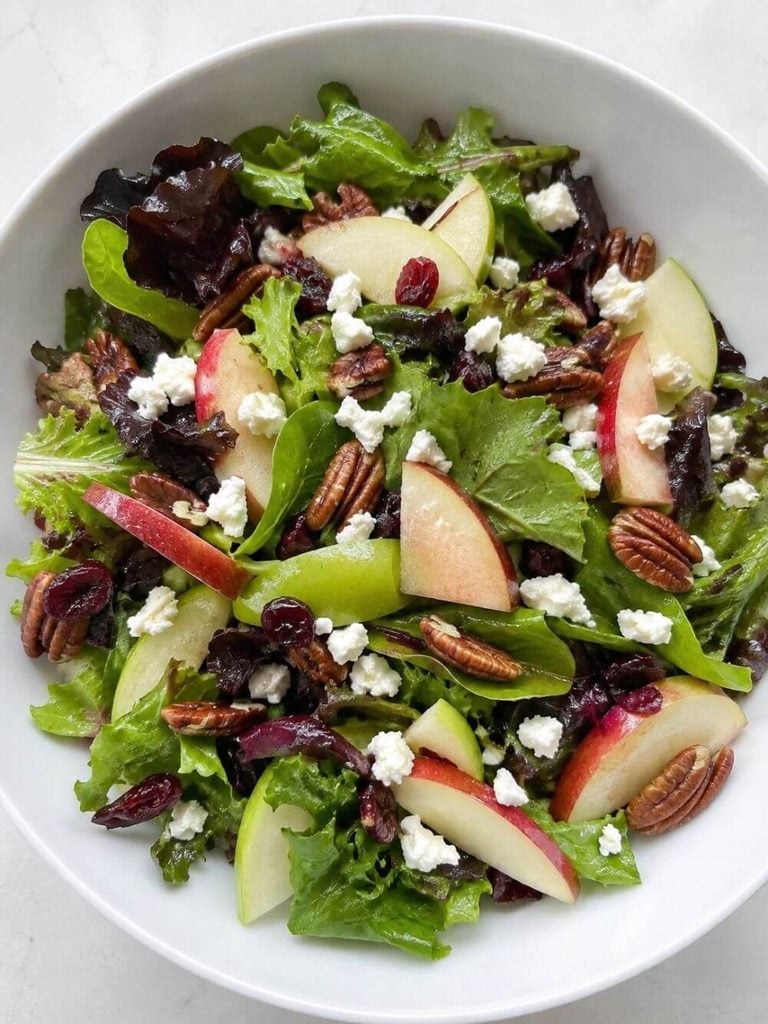
This is one of those easy fall salads I reach for when I want something seasonal without turning on the oven. Crisp apples bring sweetness and crunch, while creamy goat cheese makes the salad feel much more satisfying than a basic bowl of greens.
Pecans add that unmistakable autumn flavor, especially when they are toasted or lightly glazed with maple syrup. I love serving this kind of salad beside roasted chicken, pork tenderloin, or a simple bowl of butternut squash soup.
It also works beautifully as a Thanksgiving starter because it feels special without being too heavy. Choose a firm, sweet-tart apple such as Honeycrisp, Pink Lady, or Granny Smith, and slice it shortly before serving so it stays fresh and crisp.
- Cookin Canuck’s Autumn Salad with Apple and Pecans is a great classic version because it combines goat cheese and maple pecans with an easy apple cider vinaigrette.
- Jeanie and Lulu’s Warm Apple, Walnut, and Goat Cheese Salad is worth trying when you want a slightly cozier version with warm apples and balsamic dressing.
- The Food Hussy’s Apple Goat Cheese Salad is the simplest option of the three and uses dried cranberries and praline pecans for extra fall flavor.
2. Pear, Gorgonzola, and Candied Pecan Salad
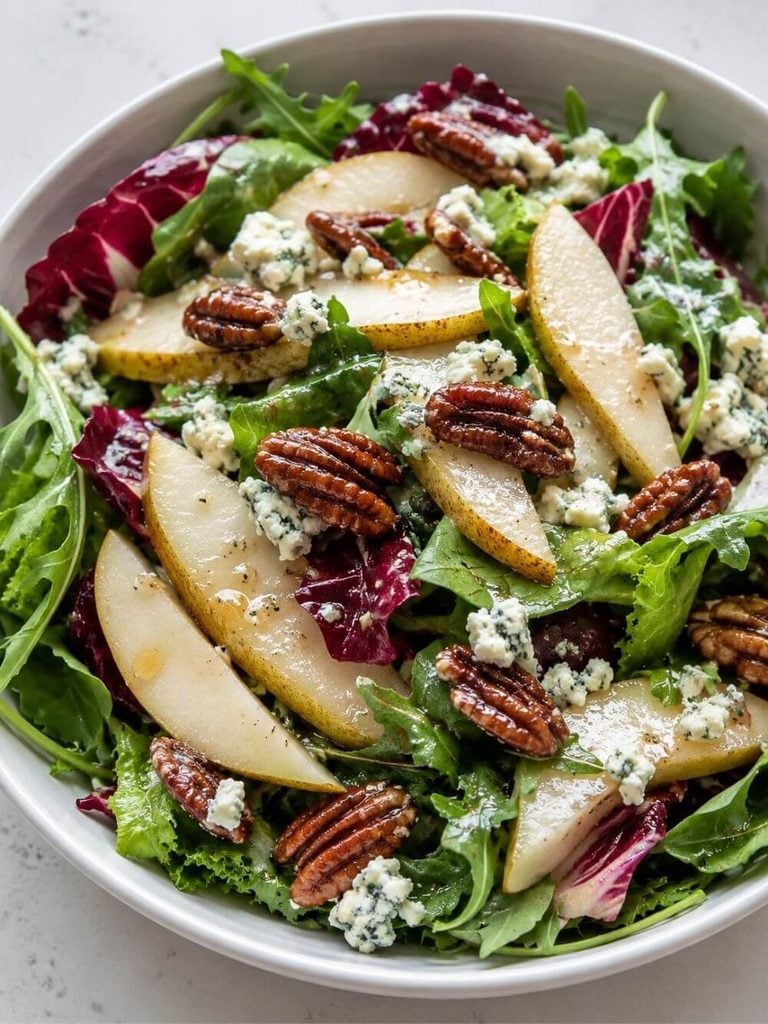
Ripe pears and blue cheese are such a good fall combination because the sweetness of the fruit softens the stronger, salty flavor of the cheese. Add crunchy nuts and a tangy dressing, and suddenly a very simple green salad feels restaurant-worthy.
I especially like this salad with arugula or a mixture of mild greens and slightly bitter radicchio. It is lovely beside roast beef, pork chops, baked chicken, or a creamy pasta dish, but it can also be served as an elegant first course for a fall dinner. Look for pears that are ripe enough to taste sweet but still firm enough to slice without becoming mushy.
If Gorgonzola feels too strong, a mild blue cheese or even goat cheese will create a gentler version.
- What a Girl Eats’ Pear and Gorgonzola Salad is ideal for entertaining because the candied pecans make it feel festive while the salad takes very little time to assemble.
- Italian Kitchen Confessions’ Pear Gorgonzola Salad is a lovely choice if you prefer crunchy hazelnuts and a simple balsamic glaze.
- Feasting at Home’s Pear Salad stands out for its vanilla-fig dressing, pomegranate seeds, and maple-glazed spiced nuts.
3. Roasted Butternut Squash and Kale Salad
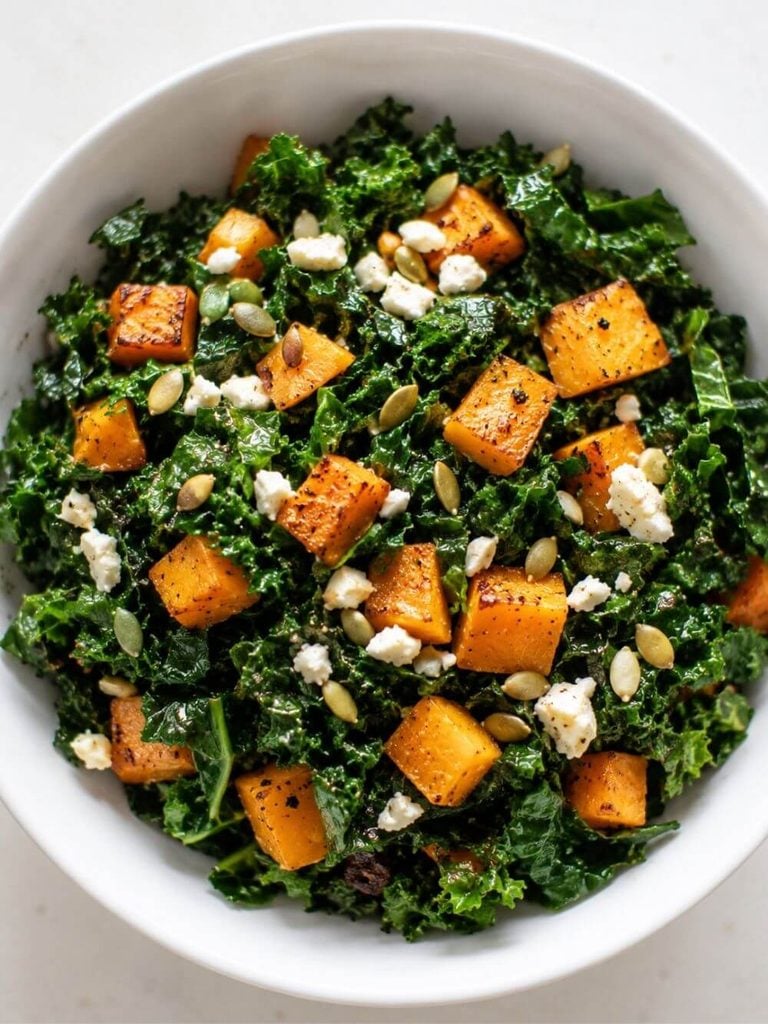
Roasted butternut squash is one of my favorite ways to make a salad feel appropriate for cold weather. Its caramelized edges and soft center contrast beautifully with sturdy kale, especially when the kale is finely chopped and massaged before serving. Cranberries, nuts, pepitas, sharp cheese, or goat cheese can all add extra texture without making the salad complicated.
This is also a practical meal-prep option because kale holds up much better than delicate lettuce. Serve it as a filling lunch, pair it with roasted chicken or turkey, or place it on a holiday table to balance heavier side dishes. I usually roast the squash ahead of time and keep it refrigerated, which makes assembling the salad much faster later in the week.
- White Plate Blank Slate’s Kale and Butternut Squash Salad is a good make-ahead option with sharp cheddar, toasted almonds, and a bright lemon dressing.
- How Sweet Eats’ Butternut Squash Kale Salad is the most unusual version, pairing smoky squash with goat cheese, pepitas, and apricot vinaigrette.
- The Culinary Compass’ Roasted Butternut Squash and Kale Salad is especially approachable because it uses a short ingredient list and can easily be turned into a meal with chicken or turkey.
4. Harvest Wild Rice Salad
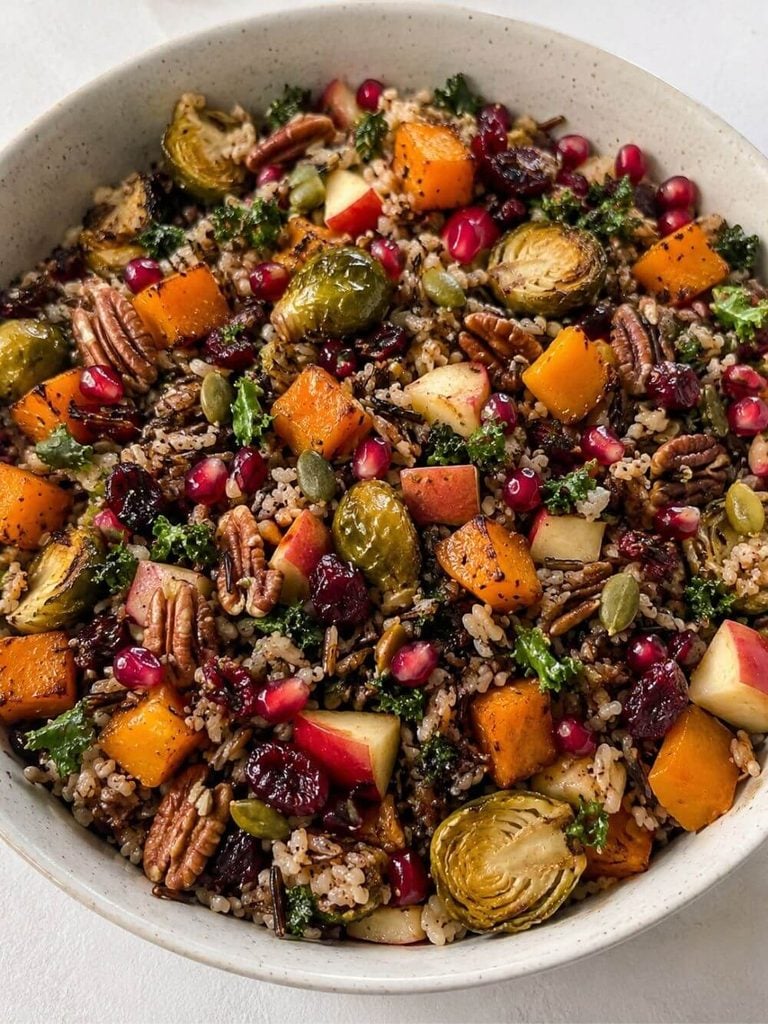
Wild rice gives a fall salad a nutty flavor and pleasantly chewy texture that leafy greens alone cannot provide. It is a wonderful base for roasted squash, Brussels sprouts, apples, cranberries, pomegranate seeds, and fresh herbs.
I like this type of salad for potlucks and holiday gatherings because it can usually sit for a while without becoming limp. It is substantial enough for lunch and works equally well beside roast turkey, baked salmon, pork, or stuffed squash.
Cooking the rice and roasting the vegetables in advance makes the final assembly much easier. Wild rice blends are usually more affordable and quicker to find than pure wild rice, and they still work well in this style of recipe.
- BetterFoodGuru’s Harvest Wild Rice Salad is the heartiest option, combining squash, Brussels sprouts, pomegranate, pecans, and tempeh.
- Something Nutritious’ Wild Rice Harvest Salad is a colorful holiday-friendly version with roasted vegetables, almonds, kale, and maple-Dijon vinaigrette.
- Closet Cooking’s Harvest Wild Rice Salad is perfect for anyone who loves traditional Thanksgiving flavors such as apple, celery, sage, thyme, rosemary, cranberries, and maple.
5. Roasted Beet, Arugula, and Goat Cheese Salad
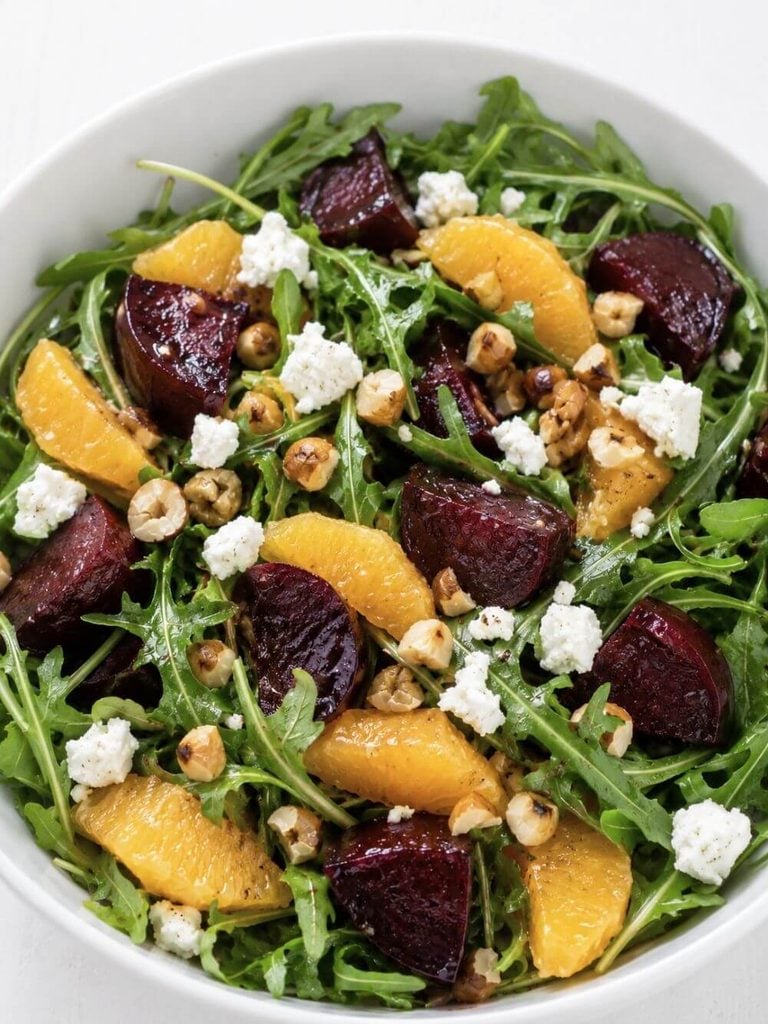
Beets become much sweeter and less earthy when roasted, making them a beautiful match for peppery arugula and creamy goat cheese.
This salad looks impressive even when the preparation is fairly simple, especially if both red and golden beets are used. I love it as a starter before a fall dinner or as a side for roast chicken, steak, salmon, pasta, or mushroom soup. Walnuts, hazelnuts, and pistachios all work well here, while orange or apple can add a fresher layer of sweetness.
Roast the beets a day or two ahead if you want to avoid a long preparation time before serving, but keep them separate from the greens so their color does not stain everything immediately.
- The Charming Detroiter’s Roasted Beet and Arugula Salad is the most indulgent version, with breaded goat cheese coins and fresh orange slices.
- A Dish of Daily Life’s Beet and Goat Cheese Salad is a more traditional choice built around roasted beets, walnuts, goat cheese, and balsamic.
- The Galley Gourmet’s Roasted Beet and Arugula Salad is recommended for its hazelnuts and straightforward flavor combination that pairs easily with meat, pasta, or soup.
6. Roasted Sweet Potato and Kale Salad
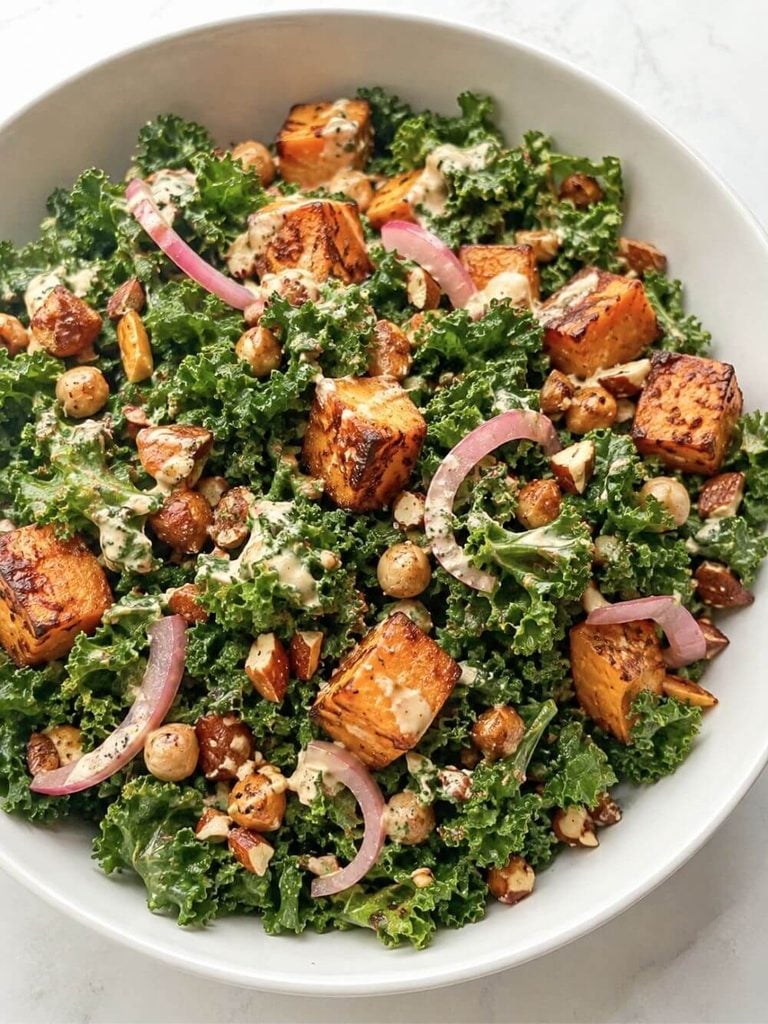
Sweet potatoes make an excellent base for an autumn dinner salad because they are comforting without making the entire dish feel heavy. Their natural sweetness works particularly well with slightly bitter kale, sharp pickled onions, crunchy nuts, and a creamy tahini dressing.
This is the kind of salad I would happily eat as a complete lunch, especially with chickpeas, quinoa, or another easy protein added. It also holds up well for meal prep as long as the crunchy toppings are stored separately. For the best texture, cut the sweet potatoes into evenly sized pieces and give them enough room on the baking sheet to caramelize rather than steam.
- Cooked & Loved’s Kale and Sweet Potato Salad is a balanced version with toasted almonds, pickled onions, and a lemony tahini-honey dressing.
- The First Mess’ Kale Sweet Potato Salad is ideal when you want a full vegan dinner, thanks to crispy chickpeas, pistachios, and spicy tahini ranch.
- The Floured Countertop’s Sweet Potato Kale Salad is a comforting homemade version with roasted vegetables and a lightly sweet apple cider vinaigrette.
7. Shaved Brussels Sprouts and Apple Salad
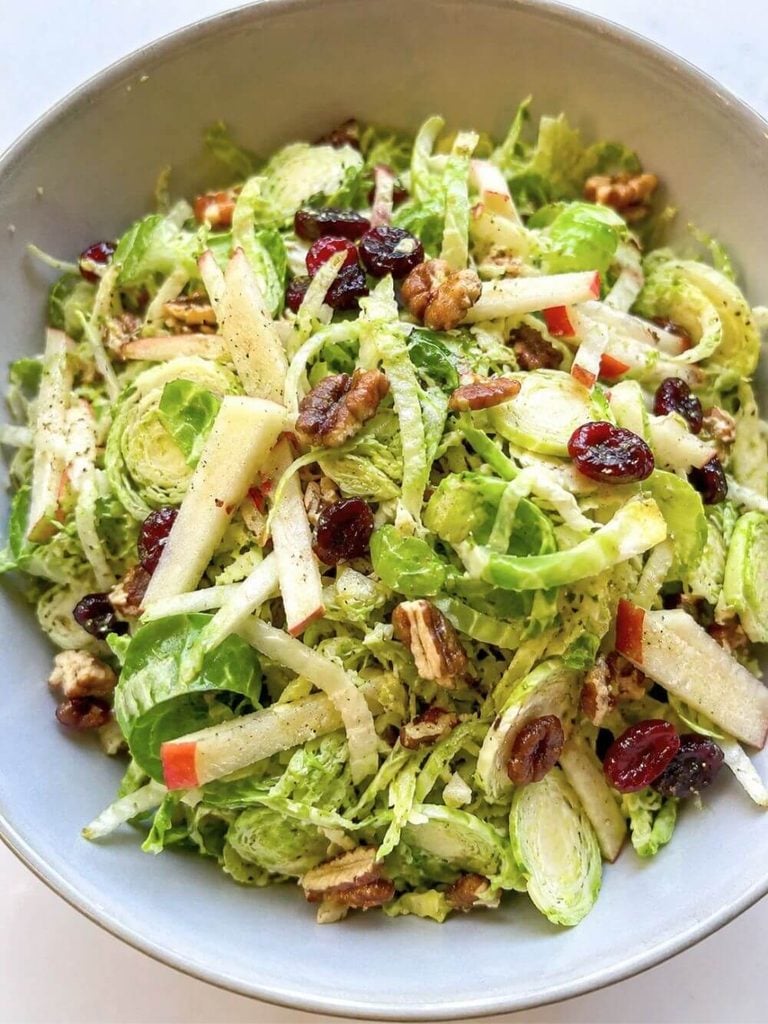
Raw Brussels sprouts may sound unusual, but once they are sliced very thinly, they become crisp, fresh, and much milder than expected. Their sturdy texture is perfect for apples, dried cranberries, pecans, walnuts, and maple-Dijon dressing. Unlike lettuce, shaved Brussels sprouts do not wilt immediately, so this is one of the better salads to prepare for a party or take to a potluck.
I love serving it with roast chicken, turkey, pork, or a rich baked pasta because its acidity cuts through heavier food. A food processor makes the shredding fast, but a sharp knife works too. Give the dressed sprouts a little time to soften, then add the nuts just before serving.
- The Food Blog’s Shaved Brussels Sprouts Salad is a sweeter version featuring apples, maple-roasted walnuts, and apple cider mustard dressing.
- fANNEtastic Food’s Brussels Sprouts Salad is especially useful for busy days because it requires no cooking and can be prepared ahead.
- Eat Yourself Skinny’s Fall Brussels Sprout Salad is the most streamlined option, combining chopped apples and pecans with maple-Dijon dressing in about 15 minutes.
8. Roasted Pumpkin, Spinach, and Feta Salad
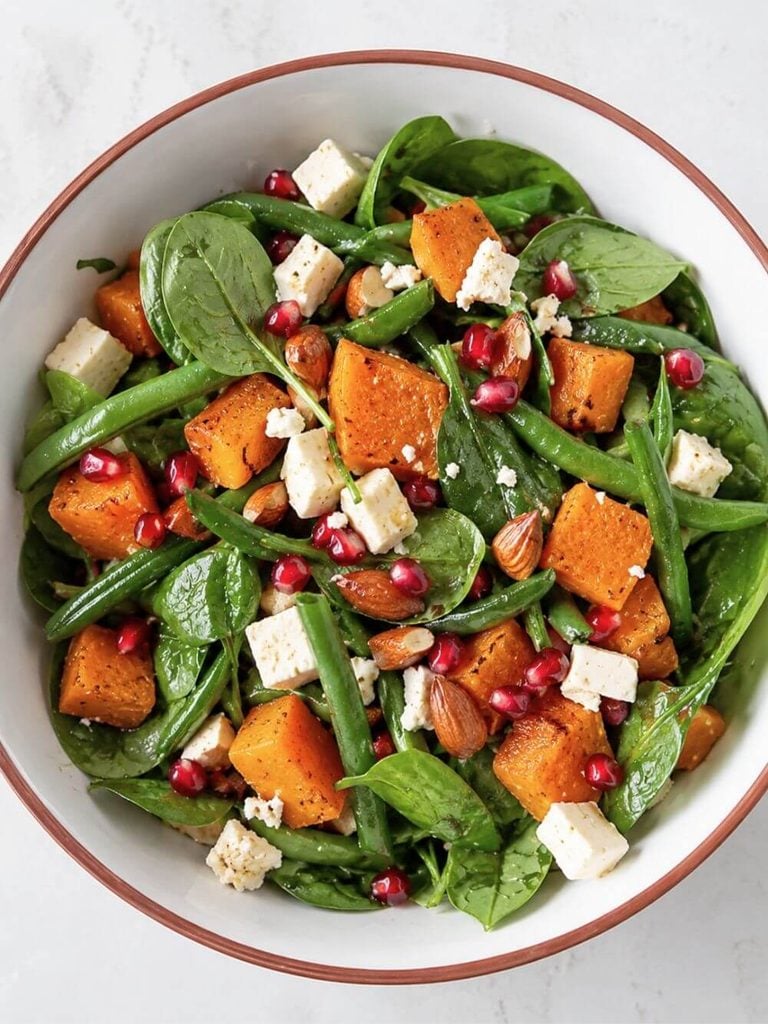
Pumpkin becomes wonderfully sweet and caramelized in the oven, while feta provides the salty contrast it needs. Baby spinach keeps the salad fresh and light, making this a good bridge between summer-style salads and heavier cold-weather meals.
I like it beside salmon, grilled or roasted chicken, steak, or a simple savory tart. Pomegranate seeds, toasted almonds, pumpkin seeds, red onion, or green beans can make it more substantial and visually interesting.
The pumpkin should be tender but not so soft that it falls apart when the salad is tossed. You can roast it earlier in the day, but wait until serving to combine everything with the dressing.
- The Home Cook’s Kitchen’s Roast Pumpkin Salad is a particularly practical make-ahead choice with spinach, green beans, feta, and honey-mustard dressing.
- Mediterranean Latin Love Affair’s Pumpkin Spinach Feta Salad is the simplest everyday version, using tomatoes, green onions, feta, and a basic red wine vinaigrette.
- Goodness Avenue’s Pumpkin Spinach Feta Salad feels more festive with pomegranate seeds, almonds, and balsamic dressing.
9. Maple-Roasted Delicata Squash Salad
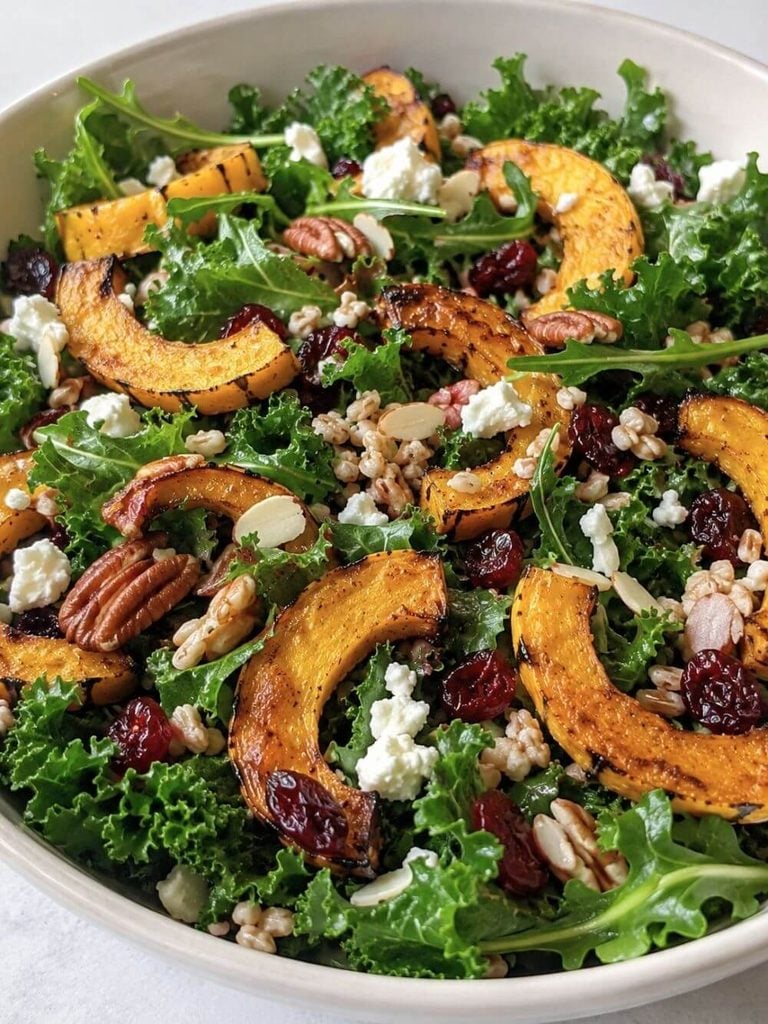
Delicata squash is perfect for an easy fall salad because its thin skin is edible, which means there is no frustrating peeling required. When sliced into half-moons and roasted, it develops caramelized edges while keeping its attractive shape. It pairs naturally with kale, arugula, cranberries, pomegranate, nuts, feta, goat cheese, bacon, and maple-based dressings.
I love serving this salad for Thanksgiving because it looks decorative without requiring complicated food styling. It can also become a complete lunch when barley, farro, chickpeas, or another grain is added. If delicata squash is difficult to find, small pieces of butternut squash make the closest practical substitute.
- Confessions of a Grocery Addict’s Delicata Squash Salad is the most substantial version, combining squash with barley, feta, cranberries, pecans, and creamy maple vinaigrette.
- Healthy GF Family’s Harvest Salad is a useful gluten-free and vegan option with massaged kale, almonds, cranberries, and lemon-maple dressing.
- So Much Food’s Roasted Delicata Squash Salad is the best choice for a richer celebration salad with bacon, candied pecans, goat cheese, and roasted shallot vinaigrette.
10. Persimmon and Pomegranate Fall Salad
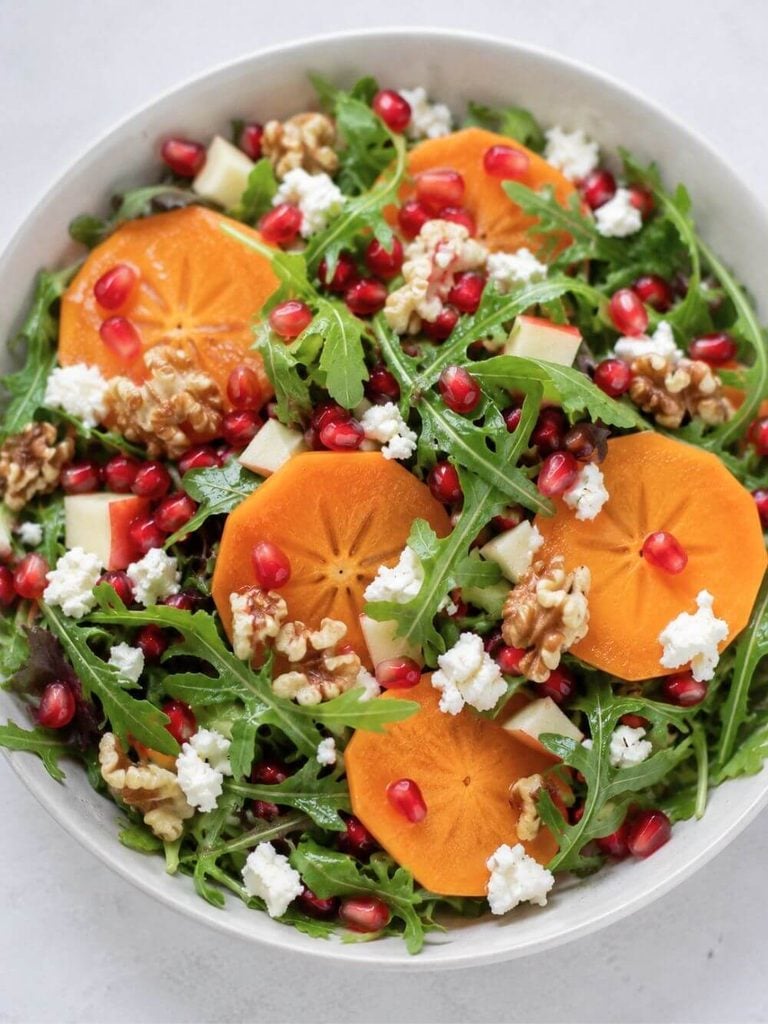
Persimmons are one of the most overlooked fall fruits, and their honey-like sweetness makes them beautiful in a savory salad. Fuyu persimmons are the easiest variety to use because they stay firm enough to slice, unlike softer Hachiya persimmons that need to be fully ripe before eating. Pair them with peppery arugula, pomegranate seeds, salty feta or mozzarella, and crunchy hazelnuts or walnuts.
This salad is especially lovely for a Thanksgiving or late-fall dinner because the orange fruit and ruby pomegranate seeds create so much color. It works as a starter or beside roasted poultry, pork, baked brie, or a simple cheese board.
- Marilena’s Kitchen’s Persimmon and Pomegranate Salad is a versatile option with apple, feta, walnuts, arugula, and maple vinaigrette.
- Garlic & Zest’s Persimmon Salad is ideal for a holiday table because it adds candied hazelnuts and maple-Dijon dressing.
- The Delicious Life’s Autumn Persimmon Caprese is the most creative variation, pairing persimmon with mozzarella, prosciutto, arugula, and pomegranate.
11. Warm Mushroom and Farro Salad
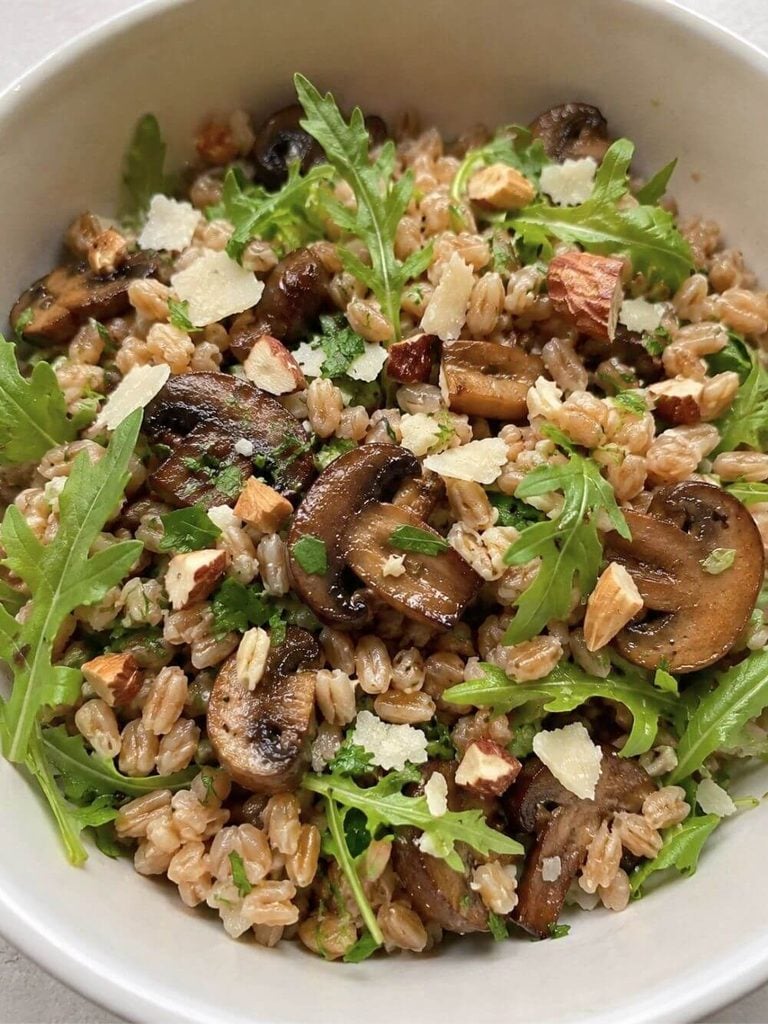
A warm mushroom and farro salad is exactly what I want when a cold leafy salad no longer sounds appealing. Farro has a pleasantly chewy texture, while browned mushrooms bring deep, savory flavor that makes the dish satisfying enough for dinner. Arugula, parsley, thyme, lemon, Parmesan, dates, or toasted almonds can keep the salad from tasting too heavy.
It is excellent beside roast chicken or steak, but it also works as a vegetarian main course with a soft-boiled egg or extra cheese. Farro can be cooked ahead and reheated briefly, making this a useful option for weekday lunches. Pearl barley is a good substitute if farro is unavailable.
- Cooking Melangery’s Warm Mediterranean Farro Salad is a rustic version with portobello mushrooms, carrot, herbs, smoked paprika, and tomato.
- She’s Almost Always Hungry’s Farro Mushroom Salad is recommended for its classic combination of roasted mushrooms, arugula, lemon, parsley, and Parmesan.
- Nosh with Tash’s Mushroomy Farro Salad adds dates and almonds, making it especially appealing if you enjoy sweet and savory flavors together.
12. Apple Cranberry Quinoa Salad
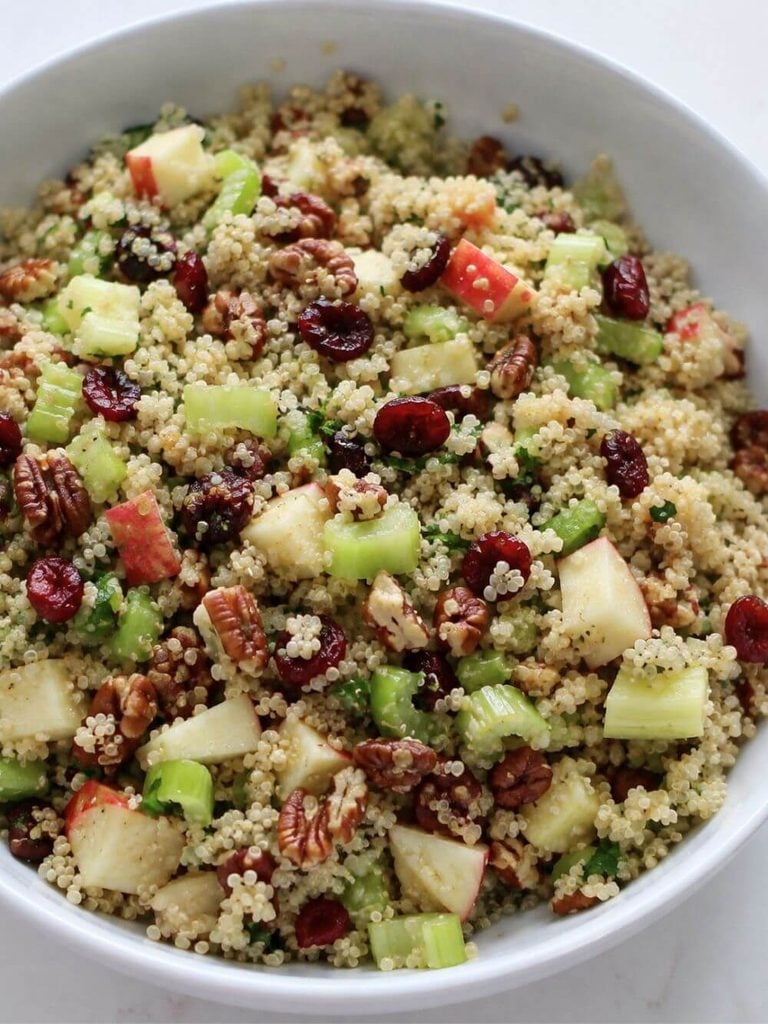
Apple cranberry quinoa salad is a dependable choice when I need something that can function as either a side dish or a light lunch. Quinoa keeps it filling, while fresh apple and celery provide crunch and dried cranberries add concentrated sweetness. Maple-Dijon, citrus, or apple cider vinaigrette keeps the flavors firmly in fall territory.
This salad is easy to transport and can be served with soup, roasted vegetables, chicken, or turkey. It is also a useful holiday option for guests who avoid gluten. Let the cooked quinoa cool before combining it with the other ingredients so the apples stay crisp and any cheese or greens do not soften from the heat.
- Vegetarian Ventures’ Fall Quinoa Salad is a simple pantry-friendly version with pecans and a maple-Dijon dressing lightly flavored with cinnamon.
- Pook’s Pantry’s Cranberry Apple Quinoa Salad is a naturally vegan option with celery and fresh herbs that works well for lunches or side dishes.
- Fresh Apron’s Apple Cranberry Quinoa Salad is recommended when you want a creamier element from goat cheese and a meal that can be ready in about 30 minutes.
13. Apple, Fennel, and Celery Salad
Not every fall salad needs roasted vegetables. Apple, fennel, and celery create an exceptionally crisp salad that is perfect beside rich autumn comfort food. Fennel has a light anise flavor, but when it is sliced thinly and mixed with tart apple, lemon, cheese, and nuts, it tastes fresh rather than overpowering.
I would serve this with salmon, roast chicken, pork, creamy pasta, risotto, or a hearty casserole. A mandoline creates the most delicate texture, although a sharp knife works perfectly well. Because the apple can brown and the vegetables gradually soften, this salad is best assembled close to serving time, with the nuts and cheese added last.
- Wednesday Night Cafe’s Apple Fennel Salad is a particularly autumnal version with celery, Parmesan, pumpkin seeds, baby greens, and apple vinaigrette.
- Sonya Sanford’s Fall Fennel Apple Salad is recommended for entertaining because it adds pomegranate and includes helpful advice for preparing it ahead.
- Chelsea’s Messy Apron’s Apple Fennel Salad is a fast 15-minute option with honey-roasted walnuts, Parmigiano Reggiano, and a simple lemon dressing.
14. Roasted Cauliflower and Chickpea Salad
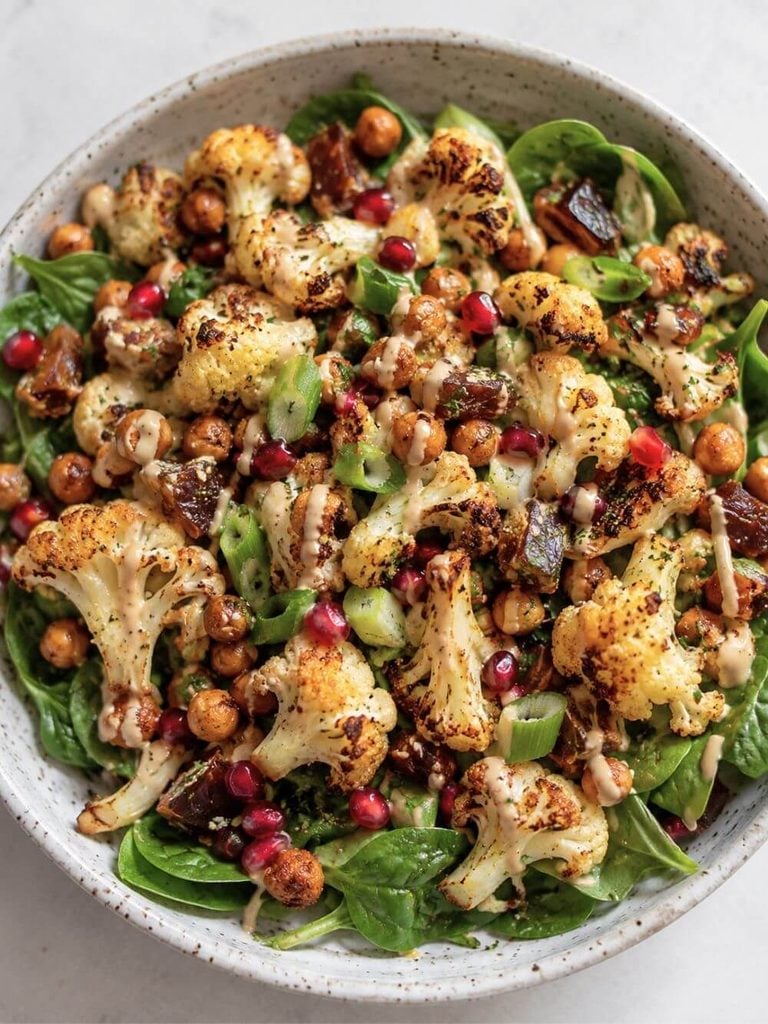
Roasting transforms cauliflower from a mild vegetable into something nutty, caramelized, and much more interesting. Chickpeas crisp around the edges in the same oven, so this salad can feel substantial without requiring meat.
The combination works particularly well with warm spices, peppery greens, dates, pomegranate, herbs, and creamy tahini dressing. I love this as a fall lunch because it is filling but still vegetable-forward, and leftovers usually hold up well.
It can also accompany grilled chicken, lamb, flatbread, or soup. For better browning, dry the chickpeas thoroughly and avoid overcrowding the baking sheet.
- Plant Based RD’s Roasted Cauliflower and Chickpea Salad is a colorful vegan version seasoned with turmeric, garlic, and fennel and finished with maple-tahini sauce.
- Healthy-ish & Happy’s Cauliflower Chickpea Salad is an approachable choice that places the roasted vegetables and chickpeas over fresh mixed greens.
- Floating Kitchen’s Roasted Cauliflower and Chickpea Salad offers the boldest flavor with paprika, cumin, sumac, scallions, and sweet dates.
15. Warm Lentil Salad with Roasted Root Vegetables
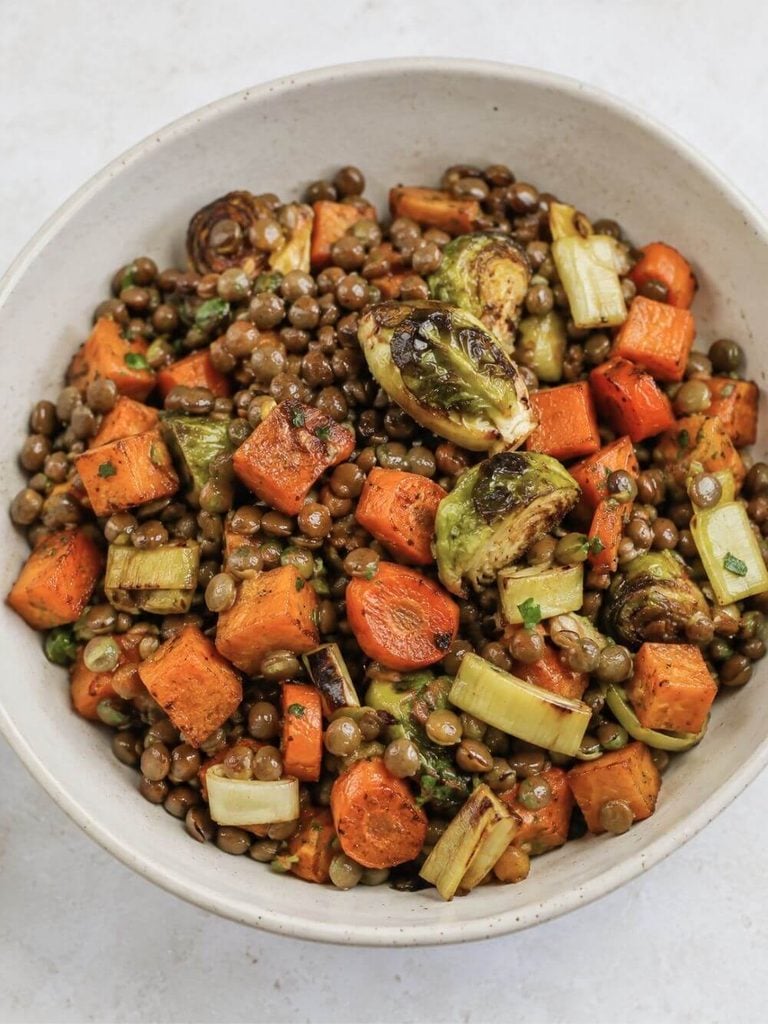
A warm lentil salad is a lovely way to finish this list because it delivers everything I want from an autumn meal: warmth, earthy flavor, roasted vegetables, and plenty of texture. Brown, green, or French lentils work better than red lentils because they keep their shape after cooking. Add roasted sweet potatoes, beets, carrots, leeks, Brussels sprouts, or mushrooms, then brighten everything with lemon, herbs, or maple-Dijon vinaigrette.
This can stand alone as a meatless dinner, but it is also excellent beside roast chicken, salmon, or sausages. Most of the components can be prepared separately in advance, and the salad is enjoyable warm, at room temperature, or cold the next day.
- With Two Spoons’ Lentil Salad with Roasted Root Vegetables is a simple French-inspired version with sweet potato, buttery leeks, and optional lemon-thyme vinaigrette.
- Craving Something Healthy’s Warm Lentil Salad is a lighter variation that combines roasted root vegetables with arugula, crispy leeks, and lemon vinaigrette.
- Cooking in My Genes’ Warm Lentil Harvest Salad is the best full-meal option, combining lentils with several fall vegetables in a recipe designed for quick dinners and meal-prep lunches.
How I Build a Fall Salad Without Following a Recipe
After making enough salads, I realized I almost always use the same basic formula. This is especially useful on those evenings when you have several random ingredients in the refrigerator but absolutely no desire to search for another dinner recipe.
I usually choose one ingredient from each of these groups:
- Something green: arugula, kale, spinach, mixed greens, shredded Brussels sprouts, or even a little radicchio.
- Something seasonal: apple, pear, persimmon, pumpkin, sweet potato, beet, delicata squash, butternut squash, roasted carrots, or cauliflower.
- Something crunchy: pecans, walnuts, almonds, hazelnuts, pistachios, pepitas, or sunflower seeds.
- Something creamy or salty: goat cheese, feta, Gorgonzola, Parmesan, mozzarella, or avocado.
- Something filling: quinoa, wild rice, farro, lentils, chickpeas, chicken, turkey, salmon, or an egg.
- Something sweet: dried cranberries, dates, pomegranate seeds, maple-glazed nuts, or fresh fruit.
- Something tangy: lemon juice, balsamic vinegar, apple cider vinegar, Dijon mustard, or pickled onions.
You absolutely do not need all seven. In fact, sometimes the best salads are the simplest ones.
Apple, greens, goat cheese, pecans, and vinaigrette? Done. Roasted pumpkin, spinach, feta, and balsamic? Also done.
This little formula is probably my favorite way to come up with new fall salad recipes without actually sitting down and inventing a recipe.
The Secret to Making Fall Salads Feel Like a Real Meal
One of the biggest problems people have with salads is that they eat one and then start looking through the kitchen cabinets an hour later. I have been there too, and the solution is usually not “eat more lettuce.”
The trick is to add something substantial.
For a salad I want to serve as lunch or dinner, I normally include at least one of these:
- roasted chicken or turkey
- salmon
- chickpeas or white beans
- lentils
- quinoa
- wild rice
- farro or barley
- eggs
- cheese
- nuts and seeds
You can combine them too. A kale salad with roasted sweet potato and chickpeas feels completely different from a plain leafy salad, especially once you add tahini dressing and a handful of toasted nuts.
If you need another easy dinner option for the nights when salad simply is not going to happen, my 5 Simple Chicken Recipes for Busy Days When You Don’t Want to Cook are exactly the kind of low-effort meals I like to keep nearby.
Roast More Vegetables Than You Need
This might be my most useful fall salad habit.
Whenever I turn on the oven for squash, sweet potatoes, carrots, cauliflower, Brussels sprouts, or beets, I try to roast more than I need for one meal. It takes almost the same amount of effort, and suddenly tomorrow’s lunch is halfway finished.
Keep the roasted vegetables in a separate container in the refrigerator and add them to your salad when you need them. Depending on the salad, I either use them cold, let them come to room temperature, or warm them for a few minutes first.
Just do not crowd your baking sheet. I have learned this lesson more times than I would like to admit: vegetables need space if you want those lovely caramelized edges instead of a tray of vegetables quietly steaming together.
Make Texture Your Best Friend
When a salad tastes a little boring, I usually find that it is missing texture rather than another complicated ingredient.
A great autumn salad can have crisp apple, tender roasted squash, chewy grains, creamy cheese, crunchy pecans, and fresh greens all in the same forkful. That contrast is what makes you want another bite.
A few easy ways to add texture:
- Toast nuts instead of using them straight from the bag.
- Add pumpkin seeds or sunflower seeds.
- Use crisp apples or pears.
- Roast chickpeas until the edges become crunchy.
- Add chewy grains such as farro or wild rice.
- Combine fresh greens with warm roasted vegetables.
- Crumble cheese over the salad at the very end.
And yes, I have absolutely eaten half the toasted pecans before they ever reached the salad bowl. I consider that a perfectly normal part of cooking.
Don’t Be Afraid of Fruit in Savory Salads
If you are new to adding fruit to salads, fall is the easiest season to start.
Apples and pears work beautifully with strong cheeses. Persimmons pair wonderfully with salty feta or mozzarella. Pomegranate adds little bursts of tart sweetness, while dried cranberries and dates are especially good with roasted vegetables and grains.
The important thing is balance. If your fruit is very sweet, add something salty, bitter, acidic, or peppery to keep the salad from tasting like dessert wearing lettuce as a disguise.
Some of my favorite combinations are:
- pear + Gorgonzola + pecans
- apple + goat cheese + walnuts
- persimmon + feta + pomegranate
- cranberry + quinoa + pecans
- apple + fennel + Parmesan
- dates + roasted cauliflower + tahini
Once you start experimenting, you will probably come up with your own combinations very quickly.
My Favorite Fall Salad Dressings
You do not need fifteen different dressings for fifteen different fall salad recipes. I tend to rotate between a handful of simple flavor combinations and adjust them depending on what is in the bowl.
For sweet roasted vegetables, I love maple-Dijon style dressings. Apple cider vinaigrette is my favorite with apples, cranberries, nuts, and hearty greens, while balsamic works beautifully with pears, beets, pumpkin, and stronger cheeses.
Tahini is another favorite when I want something creamy without making the salad feel overly rich.
A simple dressing formula to remember is:
- something acidic
- olive oil
- something slightly sweet
- mustard or another emulsifier
- salt and pepper
From there, you can add maple syrup, honey, garlic, lemon zest, herbs, tahini, or spices.
Taste it before pouring it over the salad. Dressings sometimes need a tiny adjustment, and I would much rather fix a vinaigrette in a little jar than discover after tossing everything that I have accidentally created a bowl of very expensive vinegar-flavored kale.
How to Keep Fall Salads From Getting Soggy
Meal prep and salads can absolutely work together, but separating the ingredients makes a huge difference.
If I am preparing a salad ahead, I usually store the components separately:
- greens in one container
- roasted vegetables in another
- grains or lentils separately
- dressing in a jar
- nuts and seeds somewhere dry
- cheese and delicate fruit until closer to serving
Kale, shredded Brussels sprouts, quinoa salads, lentil salads, and grain-based salads tend to hold up especially well. Delicate spinach and mixed greens need a little more care.
For apples and pears, I prefer cutting them shortly before eating whenever possible. A little lemon juice can help with browning, but nothing beats freshly sliced fruit for crunch.
What to Serve With Fall Salads
One reason I love collecting fall salad ideas is that they solve the side-dish question for so many meals.
A roasted squash or grain salad can easily stand alone for lunch, while lighter apple, pear, or fennel salads are perfect beside richer autumn dinners. They give you that fresh, acidic contrast that makes cozy food taste even better.
Try serving them with:
- roast chicken
- turkey
- pork tenderloin or pork chops
- baked salmon
- steak
- savory tarts
- pasta
- casseroles
- crusty bread
- soup
And soup plus salad might be my favorite combination once sweater weather arrives.
If that sounds good to you too, take a look at my collection of 21 Creamy Soup Recipes You’ll Fall in Love With. A warm bowl of soup beside a crisp apple salad or roasted vegetable salad is exactly the sort of dinner I want when it is dark outside far too early.
Turn Leftovers Into Tomorrow’s Salad
Some of my favorite salads have started with the very sophisticated cooking technique known as “I need to use this before it goes bad.”
A few leftover roasted vegetables? Add greens.
Half a container of cooked quinoa? Add apples and cranberries.
One lonely roasted chicken breast? Slice it over kale with pears and pecans.
A handful of vegetables, a grain, something crunchy, and a good dressing can usually be turned into lunch. This is one reason I find fall salad recipes so practical: they are incredibly forgiving.
You do not need every ingredient listed in a recipe. Use what you have, substitute what makes sense, and taste as you go.
A Few Easy Ingredient Swaps
Do not abandon a salad idea just because you are missing one ingredient.
Here are some of the substitutions I make all the time:
- No pecans? Use walnuts, almonds, hazelnuts, pistachios, or pumpkin seeds.
- No goat cheese? Try feta, blue cheese, Parmesan, or another crumbly cheese.
- No delicata squash? Butternut squash is an easy substitute.
- No farro? Try barley, brown rice, quinoa, or wild rice.
- No kale? Use spinach, arugula, shredded Brussels sprouts, or mixed greens.
- No dried cranberries? Try raisins, chopped dates, dried cherries, or pomegranate.
- No maple syrup? Honey works in many dressings.
- Want more protein? Add chicken, chickpeas, lentils, salmon, eggs, or beans.
You might even discover that you prefer your improvised version. There are very few salad police, and I have yet to encounter one in my kitchen.
Use the Same Fall Ingredients Beyond Salad
Another thing I love about seasonal cooking is how easily the same ingredients move from one meal to another.
If you already bought apples, pecans, maple syrup, cinnamon, squash, and cranberries for your salads, you can use many of them for breakfast too. My Apple Cinnamon Oatmeal Recipe is one of those simple breakfasts that makes the kitchen smell like autumn before the day has properly started.
And if you are also the person who mysteriously keeps buying pecans every fall, my Maple Pecan Granola gives them another very good purpose.
I love cooking this way because ingredients actually get used instead of disappearing into the back of the pantry until next November.
My Best Advice: Don’t Overthink Your Salad
If you take one thing from this entire collection of fall salad recipes, let it be this: nothing has to be exact.
You do not need the same apple variety. You do not need the exact cheese. You do not need three tablespoons of one nut and two tablespoons of another.
Start with seasonal ingredients you genuinely like and build from there.
If something feels too sweet, add acidity. If it feels too soft, add crunch. If it does not feel filling enough, add grains or protein. If it tastes slightly boring, salt, lemon, mustard, herbs, or toasted nuts can often fix the problem faster than adding five more ingredients.
Cooking should still leave room for curiosity.
Save These Fall Salad Ideas for Later
I hope these fall salad recipes give you plenty of inspiration for those first chilly weeks of autumn and all the cozy months that follow.
Whether you start with a crisp apple salad, roasted butternut squash, warm lentils, pumpkin and feta, or a bowl filled with whatever needs using up in your refrigerator, make it yours. Swap ingredients, change the dressing, add protein, leave something out, and discover the combinations you love enough to make again.
That is how I cook these salads myself, and I think that is part of what makes them so enjoyable.
For more seasonal recipes, creative ideas, printables, and projects, you can also follow CozyMomJournal on Pinterest. I am always collecting ideas there that I want to try next.
And now I would love to hear from you: what is your favorite fall salad combination?
Do you always add apples? Are you firmly on Team Roasted Squash? Have you discovered an unexpectedly delicious combination I need to try?
Leave a comment, share your version with me on Pinterest, or tag @cozymomjournal on Instagram if you make one of these salads. I would genuinely love to see how you make these ideas your own.