Fall mood tracker ideas are one of my favorite ways to make a bullet journal feel a little more personal once the cozy season begins. There is just something about opening a journal on a chilly evening, picking up a warm-toned marker, and coloring in one tiny leaf, pumpkin, mushroom, or coffee cup that makes the whole habit feel less like tracking and more like a small creative ritual.
I always find myself wanting to spend more time with my journal in fall. Maybe it is the changing leaves, the earlier sunsets, or the fact that suddenly every shade of rust, mustard, burgundy, and forest green seems like it belongs on paper.
And if you have ever started a mood tracker with the best intentions only to forget about it halfway through the month, you are definitely not alone. I have found that the trackers I actually want to come back to are usually the ones that are fun to look at and simple enough to fill in without turning journaling into another item on my to-do list.
That is exactly why I put together these fall mood tracker ideas. Some are quick and beginner-friendly, while others are more detailed and perfect for those evenings when you genuinely want to sit down and draw.
You will find pumpkins, leaves, cozy drinks, woodland details, Halloween-inspired designs, and plenty of other ideas that work beautifully in a fall bullet journal.
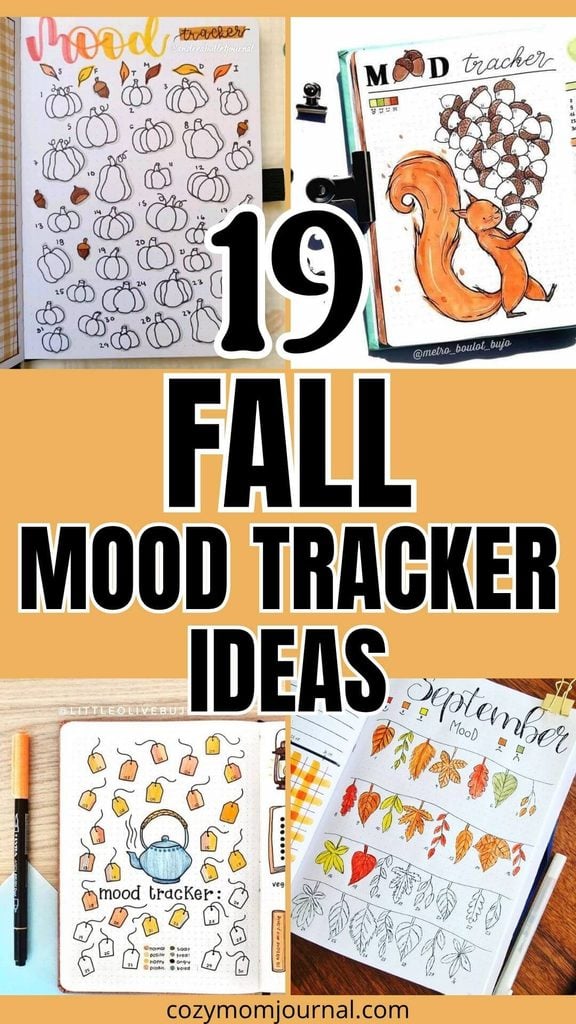
Before we get into them, one important note: I collected these inspiring ideas from talented creators, and you will find the original source credited underneath each image. If a particular design catches your eye, please visit the creator’s page and explore more of their work for even more inspiration.
If you are planning an entire seasonal setup rather than just a mood tracker, you may also want to save my September Bullet Journal Ideas for later.
1. Bubbling Cauldron Mood Tracker
Source: Pinterest
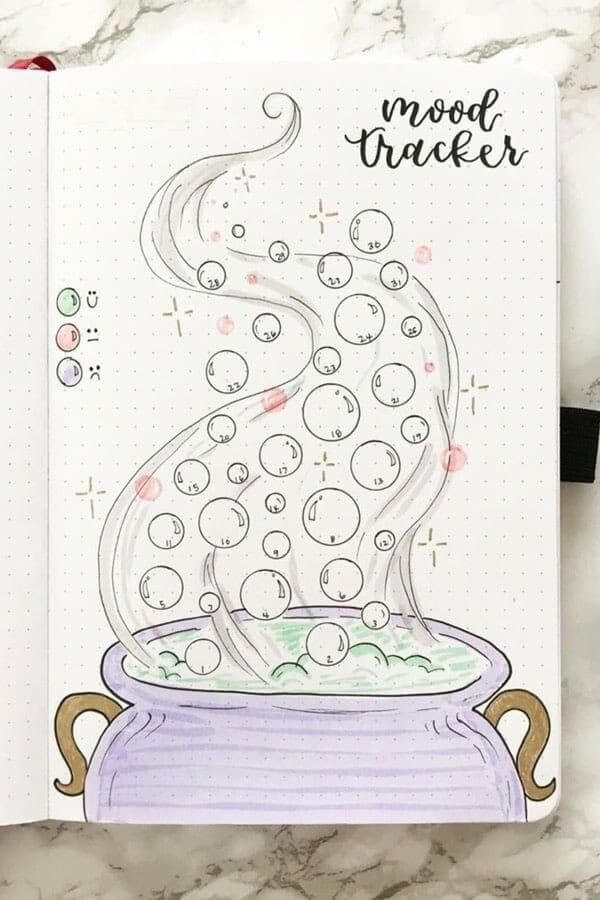
A bubbling witch’s cauldron is such a fun way to bring a little Halloween magic into your fall bullet journal. Each floating bubble can represent one day of the month, and the different bubble colors become a quick visual snapshot of how your mood changed from day to day.
Keep the cauldron itself fairly simple so the bubbles remain the main focus. Soft lavender, sage green, dusty pink, and warm neutrals work especially well if you want something seasonal without relying on the usual bright orange-and-black Halloween palette.
A few ideas to make it your own:
- Number 30 or 31 bubbles before the month begins so you never lose track of the days.
- Add a tiny color key along the side with three to five moods you actually find useful, such as happy, calm, tired, stressed, and low-energy.
- Draw wispy steam, tiny stars, or subtle sparkles around the potion for a little extra movement.
- For a moodier fall version, try plum, olive, burnt orange, mustard, and deep burgundy instead of pastels.
If drawing dozens of perfectly round bubbles feels tedious, use a circle stencil, coin, or small ruler template. Slightly different bubble sizes also look charming here, so there is no need to make everything perfectly uniform.
2. Potion Bottle Mood Tracker
Source: Pinterest
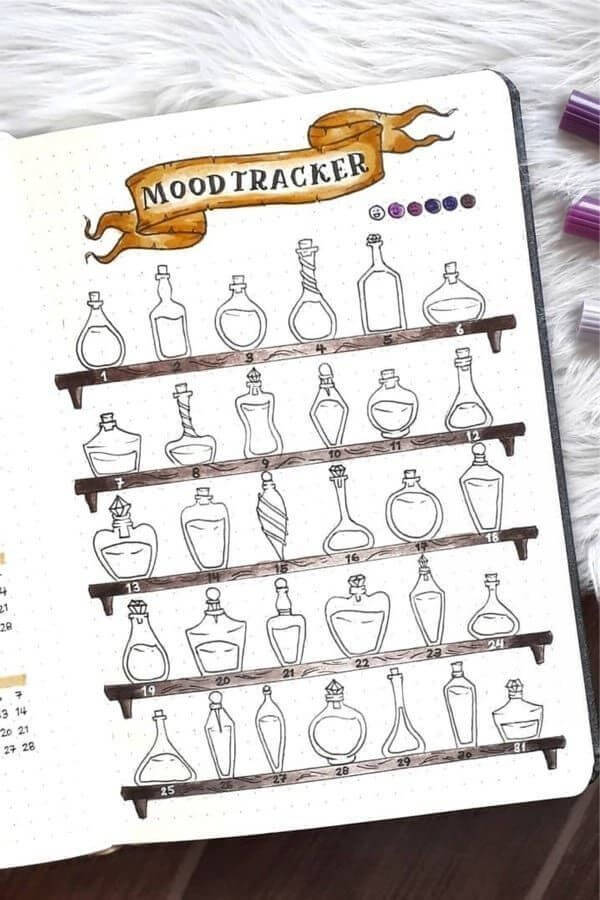
Rows of tiny potion bottles turn a simple monthly mood tracker into something that feels straight out of a cozy witch’s cabinet. Give each bottle its own number, then color in the liquid according to your mood at the end of the day.
This layout works especially well if you enjoy doodling because the bottles do not need to match. Mixing round flasks, tall skinny bottles, corked jars, and unusual potion shapes makes the spread much more interesting while still keeping the overall structure neat.
Try adding a few small details to give the shelves more personality:
- Use a five- or six-color mood scale, from lighter shades for calm or happy days to deeper colors for stressful or low-energy ones.
- Add tiny labels, stars, moons, or crystals to a handful of bottles instead of decorating every single one.
- Shade the wooden shelves with a brown marker or colored pencil to add warmth without making the page too busy.
- For an extra fall feel, build your palette around amber, rust, plum, forest green, and smoky purple.
One useful trick is to sketch the shelves first and divide the available space evenly before drawing the bottles. That way you know all 30 or 31 days will fit, and you can vary the bottle shapes freely without having to squeeze the last few into the bottom of the page.
3. Falling Leaves Mood Tracker
Source: Pinterest
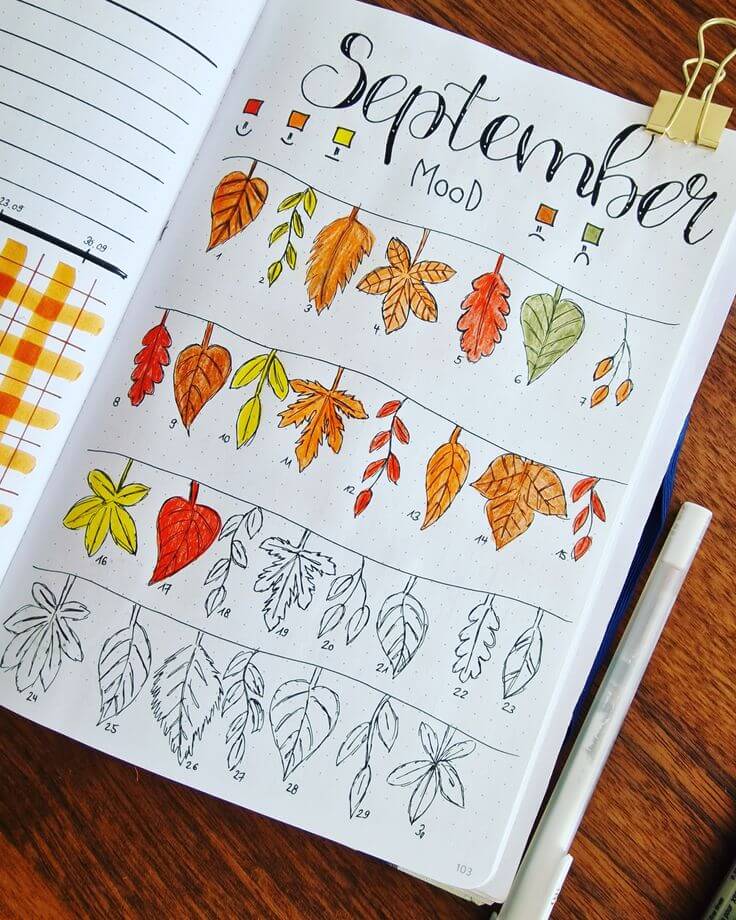
Colorful fall leaves make a beautiful mood tracker because every day can look slightly different while still fitting into one cohesive autumn theme. Number each leaf for the days of the month, then fill it with the shade that matches your mood.
The nicest part about this idea is that you can mix several leaf shapes instead of repeating the same doodle over and over. Maple, oak, birch, and simple oval leaves all work well together and make the spread feel more like a collection of real fallen leaves.
A few ways to make the layout more interesting:
- Draw the leaves hanging from thin horizontal lines, almost like little fall garlands.
- Use a warm palette of burnt orange, mustard yellow, brick red, olive green, and brown.
- Add veins with a fine-tip pen after coloring so the details stay crisp.
- Blend two nearby shades on especially memorable days if one mood does not quite capture how you felt.
If you want a softer look, colored pencils are perfect for this spread because they create natural variation inside each leaf. Markers will give you a bolder result, but leaving a few small white areas or adding darker edges can keep the leaves from looking too flat.
4. Rainy Day Umbrella Mood Tracker
Source: Pinterest
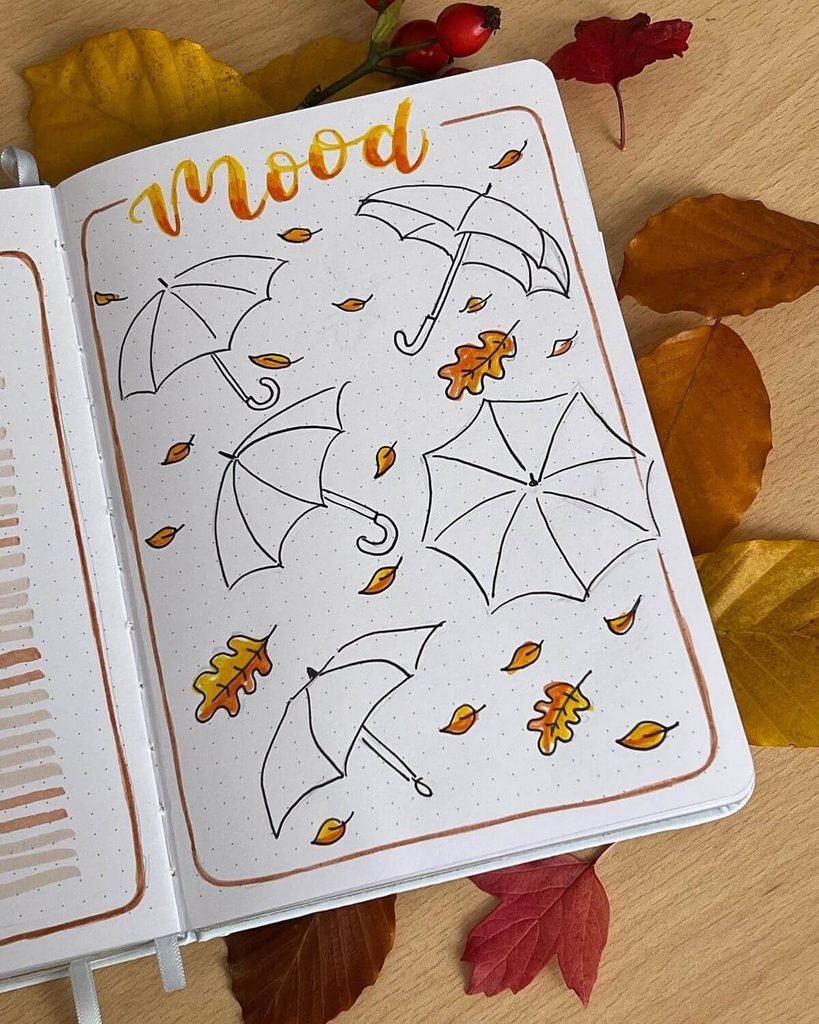
Umbrellas are a perfect fit for an autumn mood tracker, especially for September and October when the weather starts turning cooler and wetter. Instead of using one tiny shape per day, divide the umbrella panels into sections and assign each section to a different date.
The surrounding leaves can make the whole spread feel warmer and more seasonal without adding much extra work. A limited palette keeps it cohesive—think golden yellow, cinnamon brown, muted orange, and a touch of deep red.
A few ideas you could try:
- Use each umbrella for one week and split the canopy into seven sections.
- Color the umbrella panels according to your mood while keeping the handles and outlines neutral.
- Add tiny falling leaves between the umbrellas to fill awkward empty spaces.
- Use a darker outline around especially good or difficult days if you want to track intensity as well as mood.
If you prefer a cleaner layout, skip most of the background doodles and let the umbrellas do the work. For something more decorative, add tiny raindrops, wind lines, or a few scattered acorns around the edges while still leaving enough white space for the tracker to feel easy to read.
5. Squirrel and Acorn Mood Tracker
Source: Pinterest
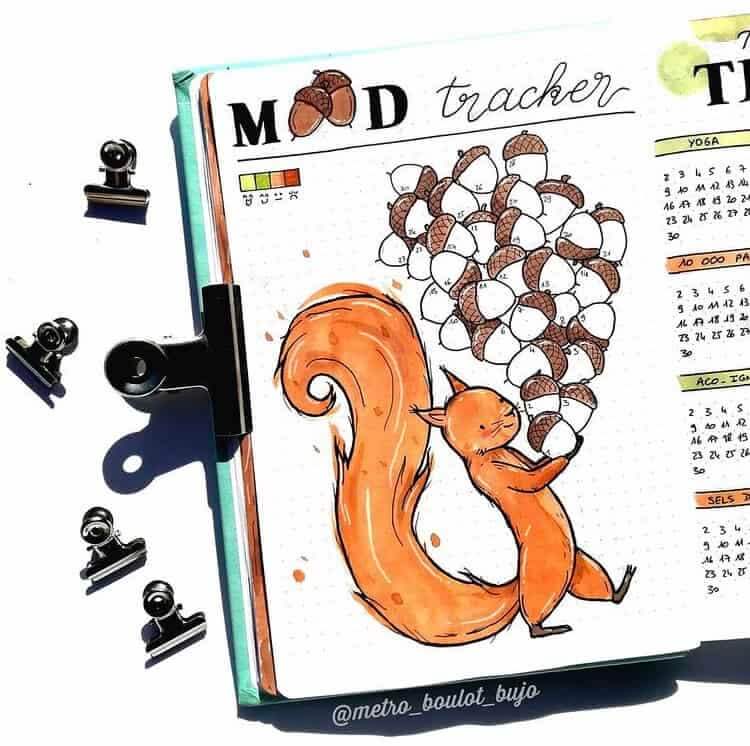
A squirrel gathering acorns is such a charming choice for a fall mood tracker, and it gives the whole spread a storybook feel without becoming too complicated. Each acorn can stand for one day of the month, so the growing pile slowly turns into a colorful record of how the month felt.
You can keep the squirrel in warm orange-brown tones and let the acorns carry the mood colors. That creates a nice balance between illustration and function, especially if you want something playful but still easy to read at a glance.
A few ways to personalize it:
- Number the acorns lightly before you start so none of the days get missed.
- Use different shades for the acorn tops and the mood-filled sections to add more depth.
- Add a few tiny leaves or scattered acorn caps around the squirrel if the page feels too empty.
- For a softer fall palette, try moss green, mustard, terracotta, rust, and muted red instead of brighter colors.
If drawing 30 or 31 acorns individually sounds like a lot, make one simple acorn shape first and repeat it with small variations. They actually look more natural when some are slightly tilted, smaller, or overlapping rather than perfectly identical.
6. Woodland Mushroom Mood Tracker
Source: Pinterest
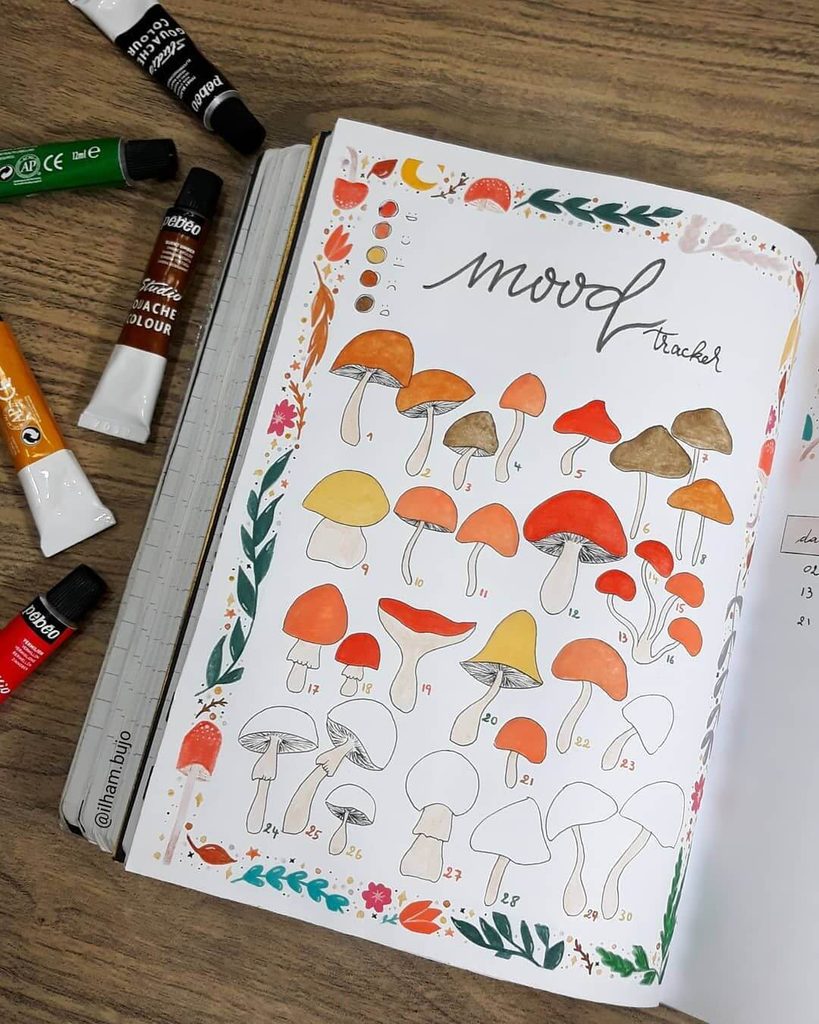
A collection of hand-drawn mushrooms makes an especially cozy fall mood tracker because the shapes can vary so much while still feeling like one unified theme. Assign one mushroom to each day, then color the cap according to your mood while leaving the stems neutral for a cleaner look.
This is a great option if you prefer organic, imperfect doodles over precise geometric layouts. You can mix tiny button mushrooms, wide caps, clustered fungi, and taller forest-style shapes so the finished spread feels more like a woodland sketchbook than a strict tracker.
Ways to make the design even more interesting:
- Build your mood key around earthy shades like ochre, rust, terracotta, moss, and warm brown.
- Add fine pen lines underneath a few caps for extra texture without making every mushroom overly detailed.
- Use clusters for weekends or memorable days to subtly break up the month.
- Frame the page with simple branches, leaves, berries, or miniature mushrooms if you want a fuller cottagecore look.
Plan the larger mushrooms first, then use smaller ones to fill the gaps. That makes it much easier to fit the entire month naturally, and the uneven spacing actually adds to the woodland feel rather than making the layout look unfinished.
7. Mushroom Village Mood Tracker
Source: Pinterest
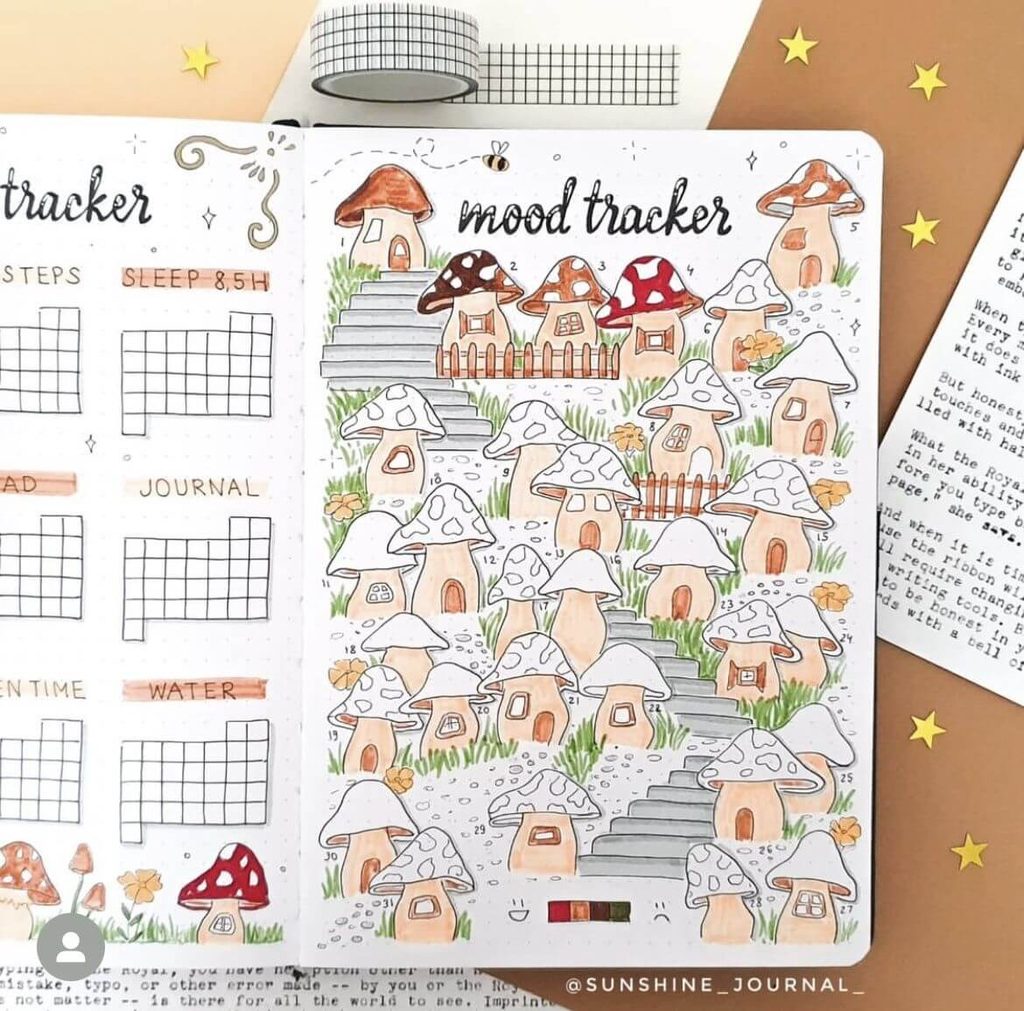
Turn your monthly tracker into a tiny woodland neighborhood by giving each day its own mushroom house. The numbered cottages create a playful scene, while the mushroom caps can be colored according to your daily mood.
This idea works especially well if you want your tracker to feel more like a finished illustration than a simple chart. Keep the houses in soft neutral tones, then let the roofs carry most of the color so your mood pattern still stands out clearly.
You could make the village more detailed with:
- Winding stone paths or little stairways between the houses.
- Tiny windows, doors, fences, and patches of grass.
- A few leaves, flowers, or acorns tucked into empty spaces.
- A mood palette inspired by the forest, such as cranberry red, burnt orange, chestnut brown, moss green, and golden yellow.
To keep the spread from becoming overwhelming, sketch the largest houses and pathways first, then fill smaller gaps with simpler mushroom homes. Repeating the same basic house shape in different sizes makes the whole village look cohesive while saving you from having to invent 30 completely different designs.
8. Cozy Mug Mood Tracker
Source: Pinterest
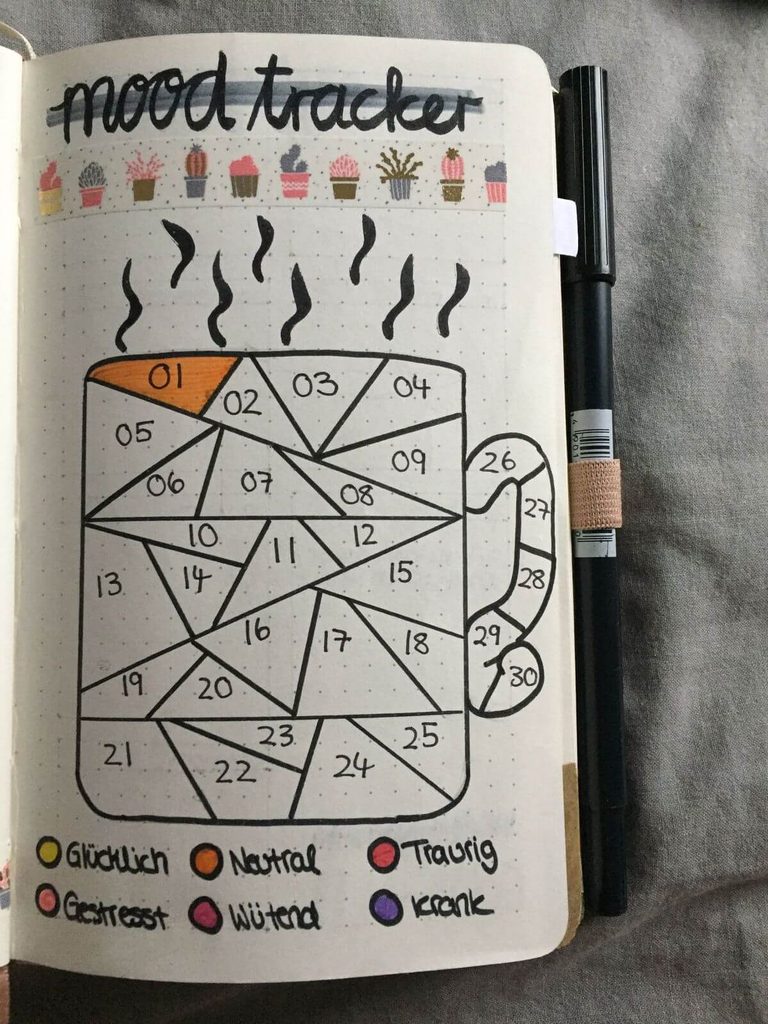
A warm mug is one of the easiest fall symbols to turn into a practical mood tracker. Divide the cup into 30 or 31 irregular sections, number each one, and color a section at the end of the day based on how you felt.
The slightly uneven shapes make the finished mug look almost like stained glass, which is a nice change from more traditional tracker grids. You can keep the rest of the page minimal and let the colored sections become the main visual feature as the month fills in.
A few ideas to try:
- Add rising steam lines to make the mug feel extra cozy.
- Use a fall drink-inspired palette with pumpkin orange, caramel, cranberry, mustard, plum, and warm brown.
- Make the handle part of the tracker too if you need a few extra spaces.
- Add a tiny tea bag tag, cinnamon stick, or marshmallows for a coffee, tea, or hot cocoa theme.
Sketch the mug outline first, then create the sections inside with simple diagonal and curved lines. There is no need to make the pieces even—in fact, the random shapes help this layout look more relaxed and handmade.
9. Tea Bag Mood Tracker
Source: Pinterest
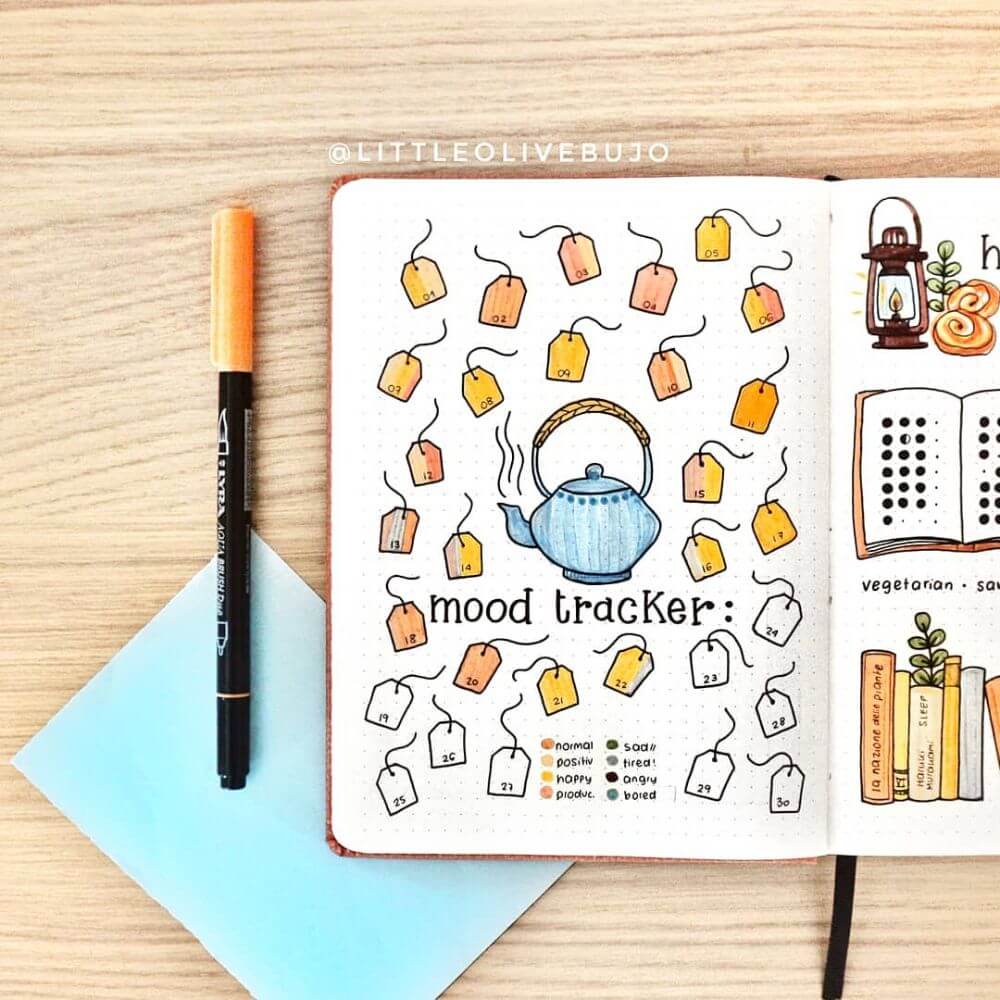
Tea bags make a cozy and surprisingly practical mood tracker for fall, especially if you love warm drinks and slower seasonal routines. Number one tag for each day, then color the tag itself according to your mood while keeping the strings and outlines simple.
Placing a teapot in the center gives the spread a strong focal point and helps the individual daily trackers feel connected rather than scattered. You can also change the teapot color to match your monthly theme—soft blue, cream, sage, or even a muted floral pattern would all work beautifully.
A few extra ideas:
- Let the tea bag colors represent both mood and energy level by using lighter or darker shades of the same color.
- Add tiny steam curls above the teapot for a little movement.
- Write a favorite tea flavor or cozy word on a few tags instead of leaving every one blank.
- Use warm honey, peach, cinnamon, ochre, and muted green shades for a softer autumn palette.
If you want to make the tracker even more meaningful, pair it with a tiny evening ritual: color in the day’s tea bag while you actually have a cup of tea. That small habit can make mood tracking feel less like another task and more like part of a relaxing fall routine.
10. Coffee Cup Mood Tracker
Source: Pinterest
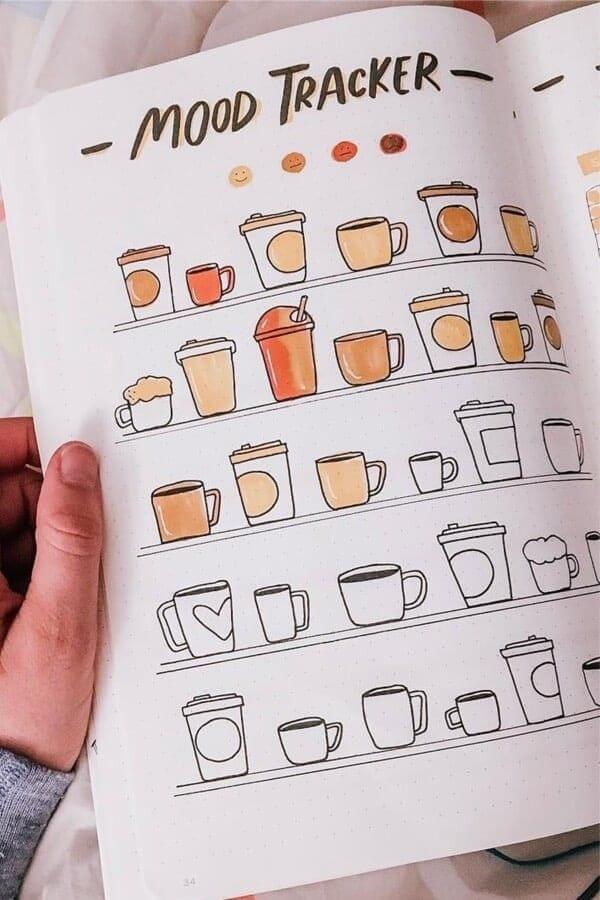
A shelf full of coffee cups makes a cozy fall tracker that feels like a month of café stops captured on one page. Use one mug or takeaway cup for each day, then fill it with the color that matches your mood.
The mix of cup shapes keeps the layout visually interesting, so you do not need much extra decoration. Ceramic mugs, lidded coffee cups, tiny espresso cups, and whipped-cream drinks can all sit together while still feeling cohesive.
A few ways to customize the idea:
- Use warm latte-inspired shades like caramel, mocha, cream, cinnamon, and burnt orange.
- Draw a tiny heart, pumpkin, or leaf on a few cups for special days.
- Add simple shelf lines first, then distribute the cups evenly so the page stays balanced.
- Let especially good days have little details like steam, foam, or a sprinkle of cinnamon.
This is also a fun tracker to pair with your actual coffee routine. If you journal in the morning, you can color in the previous day’s cup while having your first drink of the day, which makes the habit easy to remember.
11. Playful Ghost Mood Tracker
Source: Pinterest
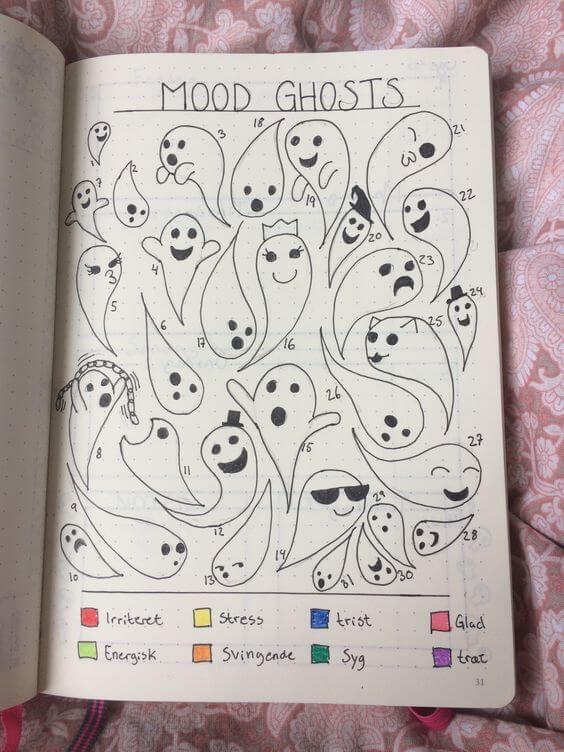
A page full of expressive little ghosts makes mood tracking feel much more playful, especially for October. Give each ghost a different face or pose, number them for the days of the month, and color each one according to your mood.
The best part of this layout is that the ghosts can show personality before you even add color. Some can look sleepy, cheerful, nervous, grumpy, surprised, or completely relaxed, which makes the final page feel almost like a tiny cast of characters.
A few fun ways to build on the idea:
- Give a handful of ghosts simple accessories like sunglasses, hats, bows, or scarves.
- Use brighter mood colors if you want a cute Halloween look, or muted tones for something softer.
- Vary the ghost shapes so some are tall and wavy while others are short and round.
- Add tiny facial changes to reflect the day more specifically, even if two days use the same color.
Because the shapes are so simple, this is also a great option if you want a tracker that is easy to draw freehand. Start by scattering larger ghosts around the page, then fill the smaller spaces with tiny ones until you have enough for the full month.
12. Spiderweb Mood Tracker
Source: Pinterest
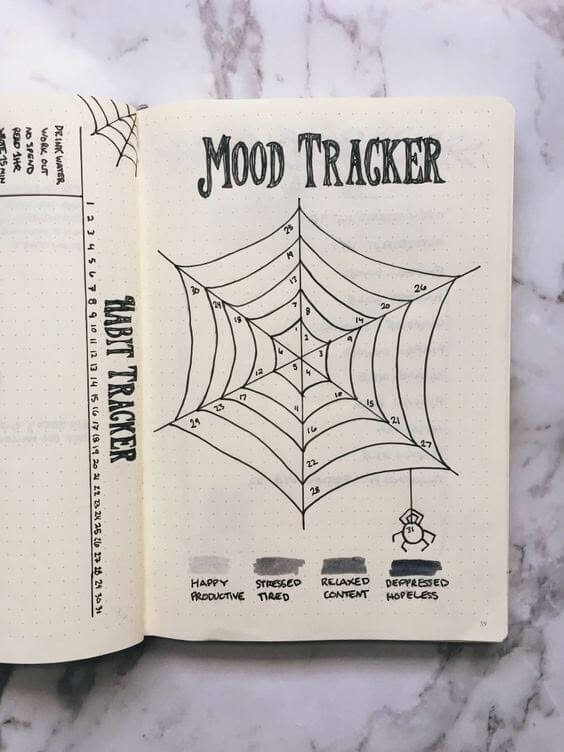
A spiderweb makes a clever October mood tracker because the structure naturally gives you plenty of small sections to use for individual days. Number the spaces around the web, then shade each one according to your mood until the entire design slowly fills in over the month.
This format is especially good if you prefer a cleaner Halloween spread without lots of extra doodles. The web itself creates enough visual interest, and a tiny hanging spider adds just the right amount of detail without making the page feel crowded.
A few ways to customize it:
- Divide the web into exactly 30 or 31 numbered sections before you start coloring.
- Use a moody palette with charcoal, plum, dusty blue, burgundy, and muted gray.
- Keep the spider simple and small so it stays decorative rather than becoming the focal point.
- Add a second tracking layer by outlining especially intense days with a darker pen.
If you want the web to look balanced, draw the main spokes first and add the curved connecting lines afterward. A ruler can help with the larger structure, but slightly uneven curves actually make the finished web feel more natural and hand-drawn.
13. Patchwork Leaf Mood Tracker
Source: Pinterest
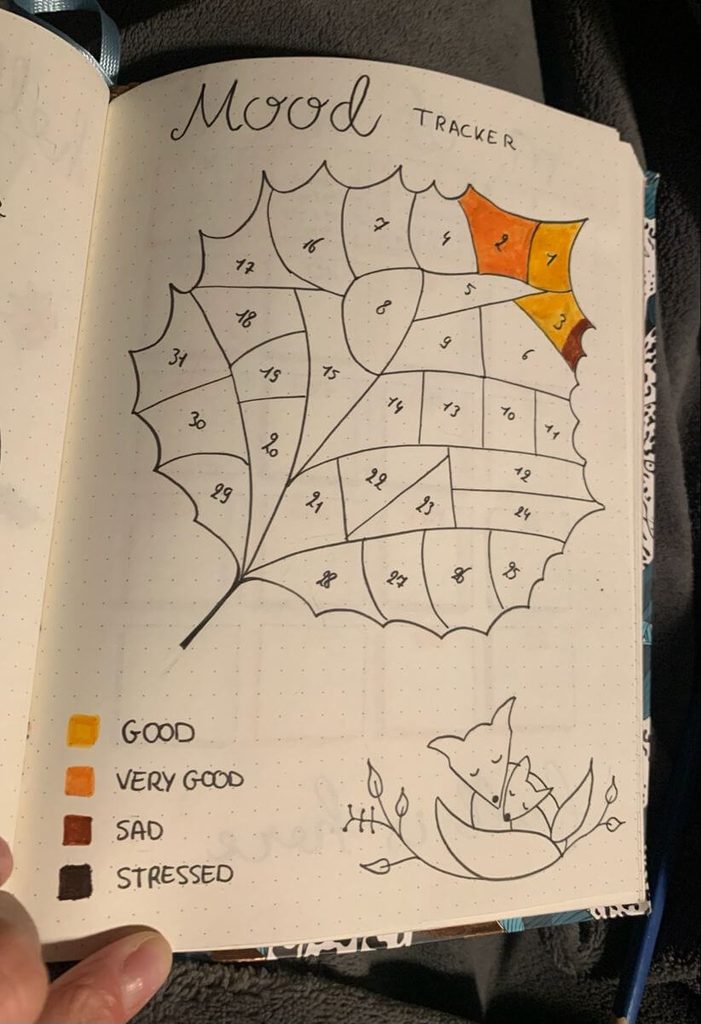
A single oversized leaf can become the entire tracker when you divide it into small numbered sections for each day of the month. As the colors gradually fill in, the leaf starts to look almost like a stained-glass or patchwork design, which gives the spread a really satisfying finished look.
This format is especially useful if you like simple layouts with one strong focal point. You only need to draw the leaf once, then use curved and angled lines to create enough spaces for 30 or 31 days.
A few ways to make it your own:
- Choose a classic fall palette with mustard, pumpkin orange, chestnut, and deep brown.
- Follow the natural veins of the leaf when creating the daily sections so the divisions feel intentional.
- Use a slightly darker outline around the outer edge to make the finished shape stand out.
- Add one small seasonal doodle in the corner, such as a sleeping fox, acorn, or tiny branch, instead of filling the entire background.
If you want the tracker to feel softer, use just four or five closely related autumn shades rather than a rainbow of mood colors. By the end of the month, the gradual color pattern can look decorative enough to double as one of the main illustrated pages in your fall bullet journal.
14. Ghost and Balloon Mood Tracker
Source: Pinterest
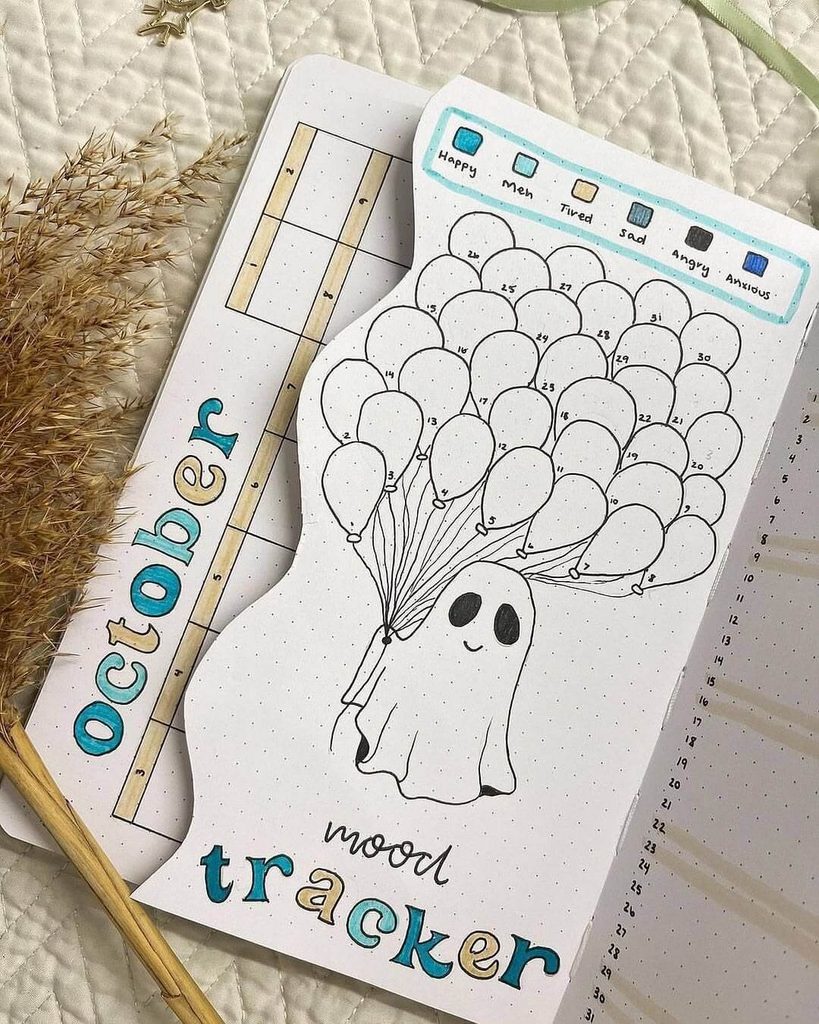
A little ghost carrying a bundle of balloons makes an adorable October mood tracker without leaning too heavily into spooky Halloween imagery. Each balloon represents one day of the month, so the bunch gradually turns into a colorful record of your moods as the days pass.
The balloon shapes are especially beginner-friendly because they do not need to be identical. Slight differences in size and placement actually make the cluster look fuller and more natural.
A few ways to personalize the spread:
- Use a broader mood key with options like happy, calm, tired, sad, angry, and anxious.
- Let the balloon strings overlap and cross for a more playful, hand-drawn look.
- Keep the ghost black and white so the mood colors stand out more clearly.
- Add tiny stars, bats, or sparkles around the edges if you want a stronger Halloween theme.
Before drawing the strings, place all 30 or 31 balloons first and number them lightly in pencil. Once you know the spacing works, connect them back to the ghost and finish the outlines in pen.
15. Jack-o’-Lantern Patchwork Mood Tracker
Source: Pinterest
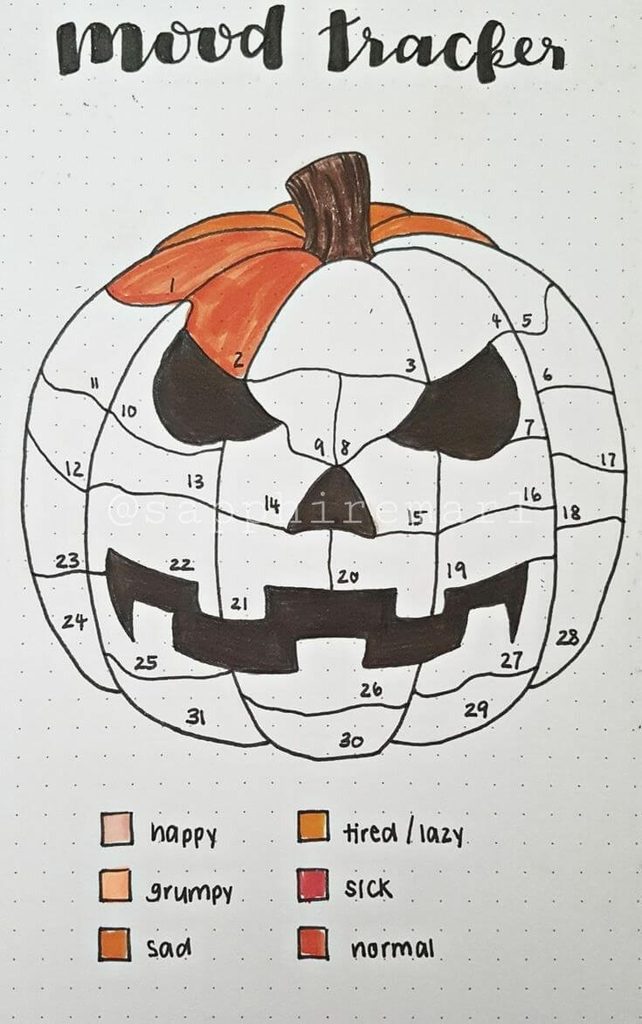
A sectioned jack-o’-lantern is a great choice if you want your fall mood tracker to feel festive but still very easy to set up. Split the pumpkin into 30 or 31 numbered shapes, then fill in one section each day so the whole face slowly comes to life as the month goes on.
Because the pumpkin is already such a bold focal point, you do not need much else on the page. The carved eyes, nose, and smile add personality right away, while the patchwork-style sections make the finished spread look colorful and satisfying by the end of the month.
A few ways to make it even better:
- Use a cozy fall palette with pumpkin orange, rust, peach, mustard, brick red, and warm brown.
- Keep the carved features dark or shaded so the mood colors stay easy to notice.
- Make the stem and leaf decorative, but let the pumpkin body do most of the tracking.
- Try assigning similar shades to related moods if you want the overall page to look more cohesive.
If you want a cleaner result, sketch the pumpkin outline first and add the facial features before dividing the remaining space into daily sections. Uneven shapes work especially well here, since they mimic the natural ridges of a real pumpkin and keep the tracker from feeling too rigid.
16. Thanksgiving Turkey Mood Tracker
Source: Pinterest
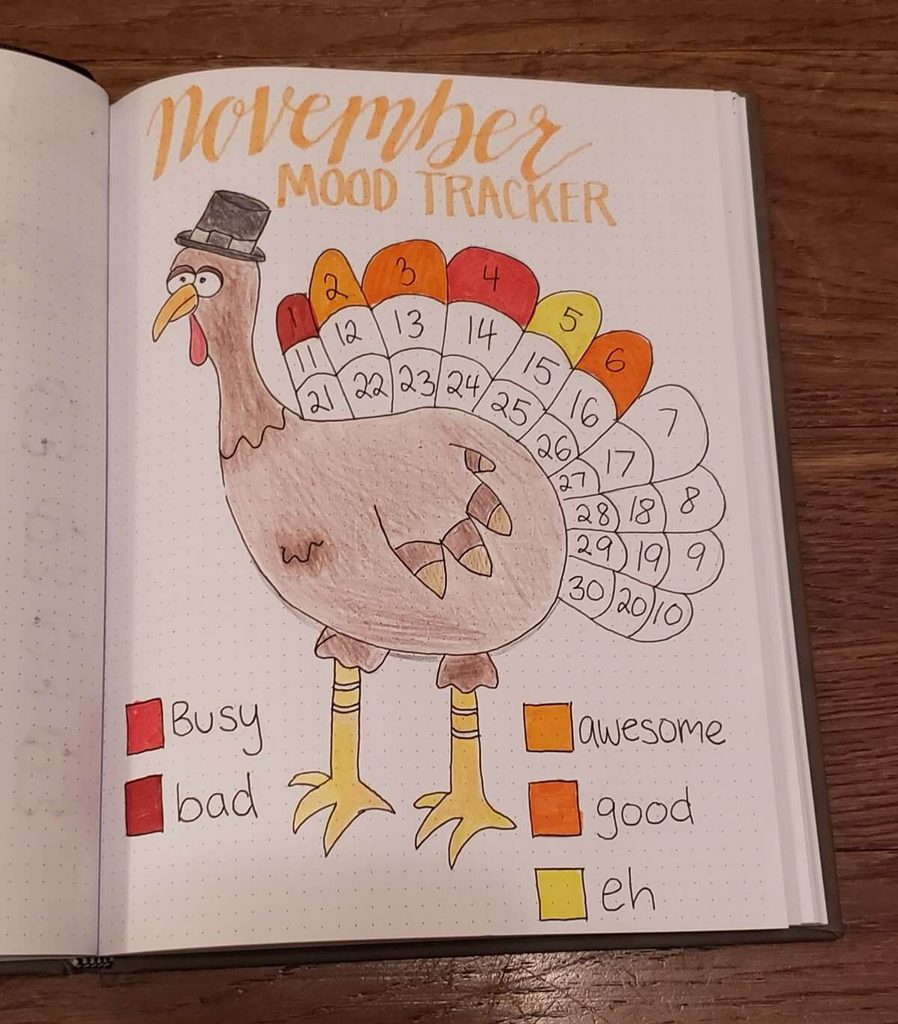
A turkey is a fun choice for a November mood tracker, especially if you want something that feels seasonal without using pumpkins or leaves again. The tail feathers are the perfect place to build the tracker, with each numbered section representing one day of the month.
Instead of coloring the whole bird differently, keep the body in warm neutral shades and let the feathers show the changing mood colors. That way, the tracker stays easy to read while the turkey still looks cohesive and decorative.
A few ways to make it more interesting:
- Divide the tail into rows so you can fit all 30 days without making the feathers too crowded.
- Use classic autumn shades like red, orange, mustard, rust, and deep brown for the mood key.
- Add a tiny pilgrim hat, bow tie, or scarf if you want a playful Thanksgiving touch.
- Keep the facial expression simple so the colorful feather pattern remains the main focus.
This layout works best if you sketch the full feather shape first, then divide it into smaller sections afterward. Using curved lines that follow the natural direction of the tail helps everything feel intentional instead of looking like a grid placed on top of the illustration.
17. Cozy Scarf Mood Tracker
Source: Pinterest
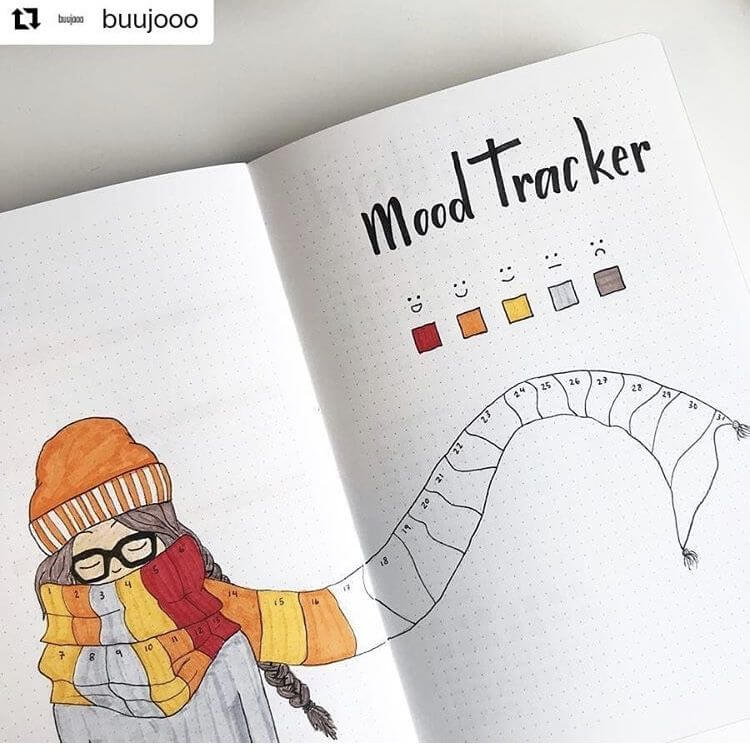
A long striped scarf makes such a clever mood tracker for late fall because it feels cozy, seasonal, and a little different from the usual leaves or pumpkins. Number each scarf section for the days of the month, then fill them in as you go so the whole design slowly turns into a colorful record of your moods.
What makes this idea stand out is the sense of movement across the page. Let the scarf wind from one side of the spread to the other, and keep the character simple so the scarf stays the star of the layout.
A few easy ways to make it even more charming:
- Use warm, bundled-up colors like mustard, rust, cranberry, camel, and cream.
- Alternate stripe widths so the scarf looks more natural and less rigid.
- Match the hat or sweater to a few of the scarf tones for a more pulled-together page.
- Add tiny stitched details, fringe, or little blush marks if you want a softer, more whimsical look.
It also works beautifully as a transition spread between fall and winter themes. If you want the tracker to feel extra personal, draw the scarf in your favorite seasonal color palette or style it around outfits you actually love wearing in colder weather.
18. Pumpkin Patch Mood Tracker
Source: Pinterest
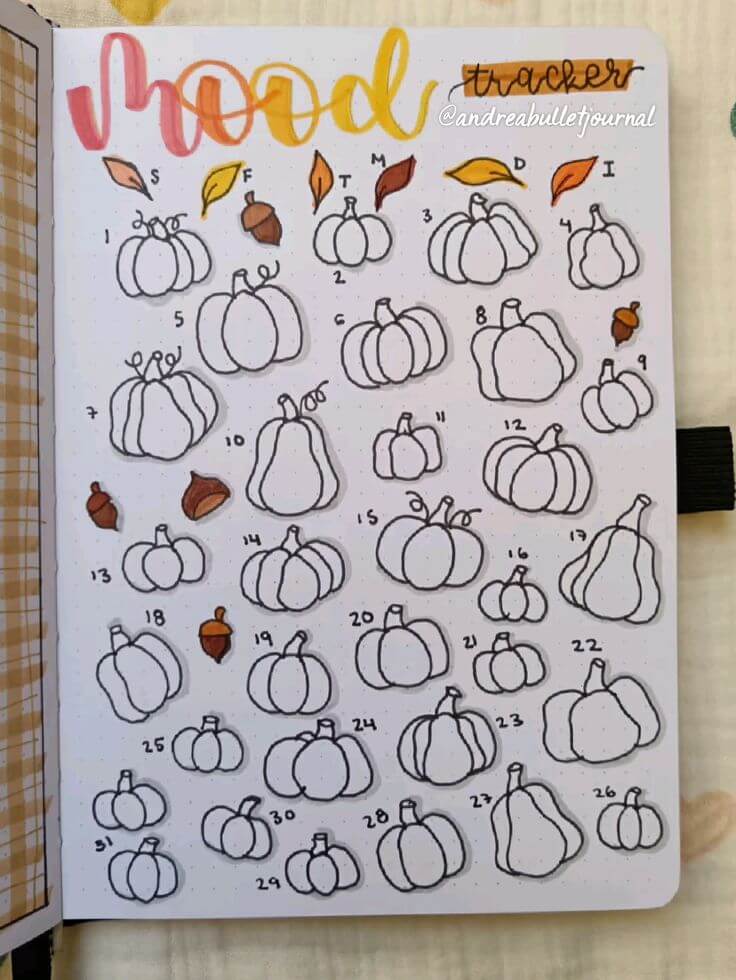
A page filled with differently shaped pumpkins makes an easy, cozy mood tracker that works beautifully for September, October, or November. Give each pumpkin a number, then color it according to your mood so the page gradually turns into a cheerful little pumpkin patch.
Because the pumpkins vary in size and shape, you can arrange them loosely instead of forcing everything into rows. That gives the spread a more relaxed, hand-drawn feel and makes it easier to fit all 30 or 31 days.
A few ideas to add more personality:
- Mix round pumpkins with tall, squat, and slightly lopsided ones.
- Use the stems and vines as small decorative details rather than part of the tracking system.
- Add a few acorns or falling leaves between the pumpkins to fill empty spots.
- Try earthy mood colors like mustard, rust, olive, terracotta, and deep brown for a softer autumn look.
If you want the finished page to stay easy to read, keep the outlines fairly simple and avoid adding too much detail inside each pumpkin. A few curved ridge lines are enough to make them recognizable while still leaving plenty of space for the mood color to stand out.
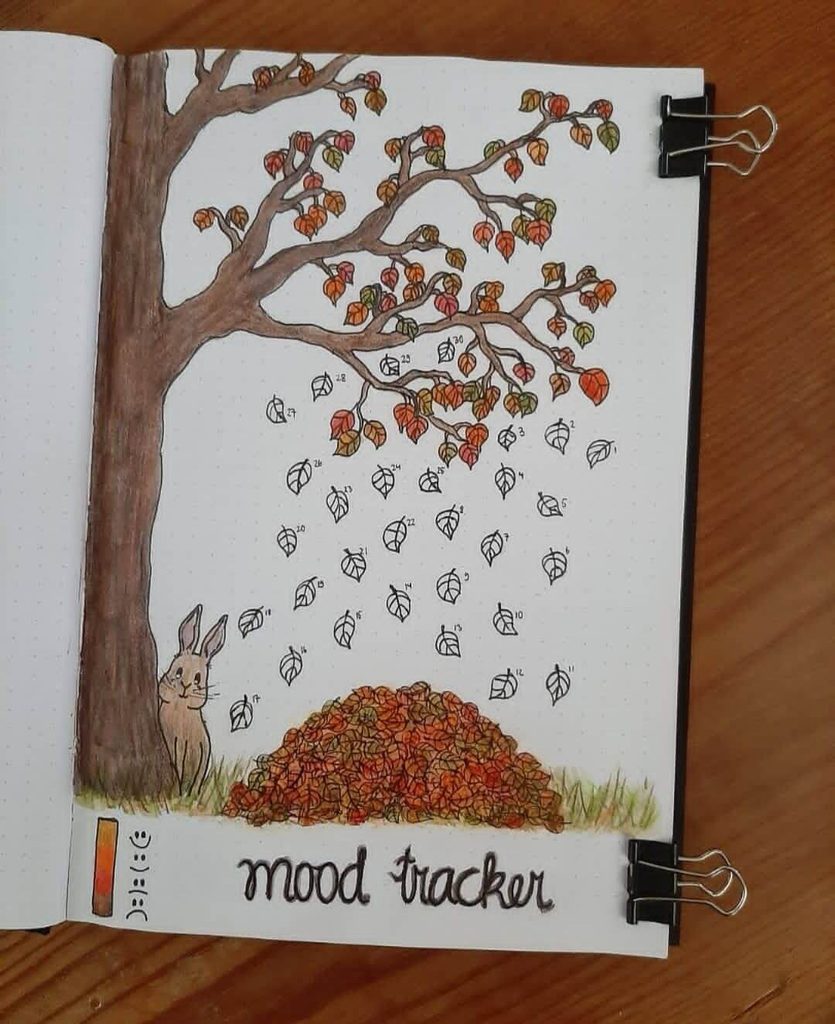
19. Falling Leaves Tree Mood Tracker
Source: Pinterest
A tree shedding its leaves creates a beautiful sense of movement for a fall mood tracker, and it works especially well if you want the page to feel calm and a little storybook-like. Number each falling leaf for a day of the month, then color it in as the days pass so the leaf pile at the bottom gradually feels tied to the whole scene.
The tall tree trunk gives the layout strong structure, while the scattered leaves keep it from looking too formal. Adding a small rabbit, fox, or other woodland detail near the base can make the spread feel even more charming without distracting from the tracker itself.
A few ideas to make it even more special:
- Use warm leaf shades like rust, amber, mustard, olive, and deep orange for a classic fall palette.
- Draw some leaves still attached to the branches and others drifting downward to create more depth.
- Keep the numbered leaves slightly larger in the center of the page so they stay easy to color.
- Let the leaf pile at the bottom echo the same colors for a more finished, cohesive look.
If you want the composition to feel balanced, sketch the trunk and main branches first, then place the falling leaves in a loose stream rather than spacing them evenly. Slightly different leaf sizes and angles will make the whole tracker look more natural, almost like a breezy autumn afternoon caught on paper.
How to Create a Fall Mood Tracker You Will Actually Use
There is one little mistake I see people make with mood trackers all the time: choosing a gorgeous design without thinking about whether it will still feel easy to use on day 23.
I have done this too. A complicated spread can be incredibly fun to create on the first day of the month, but if filling it in requires five pens, a ruler, and ten minutes of concentration every evening, suddenly that beautiful tracker becomes very easy to ignore.
The best fall mood tracker ideas are not necessarily the most detailed ones. They are the ones that fit naturally into your routine.
Before drawing yours, think about three things:
- How much time do you realistically want to spend updating it each day?
- Do you prefer coloring one simple shape or adding a little more detail?
- Do you want to track only your overall mood, or something more specific?
If you usually journal for only a few minutes, pumpkins, leaves, balloons, tea bags, or simple mushrooms are great choices. If drawing is part of the relaxing experience for you, a mushroom village, woodland scene, or detailed seasonal illustration may be much more satisfying.
There really is no “better” option. Your tracker only needs to work for you.
Keep Your Mood Key Simple
It is tempting to create a mood key with ten different emotions because, technically, our days are complicated.
The problem is that by the end of a long Tuesday, trying to decide whether you felt “content,” “peaceful,” “good,” or “slightly above average” can become a surprisingly philosophical exercise.
I usually think fewer categories work better.
For example:
- Great
- Good
- Neutral
- Tired or low-energy
- Stressed
- Sad
You can always adjust the categories to reflect what you actually want to notice about yourself.
Some people may find it more useful to track energy instead of emotion, while others might want categories such as calm, anxious, productive, overwhelmed, or happy.
The important part is choosing labels that make sense immediately when you look at them.
Choose Fall Colors You Will Enjoy Using All Month
The color palette is where fall mood tracker ideas become especially fun.
You certainly do not have to limit yourself to orange and brown. Fall gives you a surprisingly large color palette to play with.
Some combinations I love for seasonal pages are:
- Rust + mustard + olive + burgundy
- Terracotta + dusty pink + warm brown + cream
- Pumpkin orange + forest green + deep plum
- Caramel + cranberry + muted gold + chocolate brown
- Sage + peach + cinnamon + soft beige
If bright colors are more your style, use them. Your bullet journal does not need to match an imaginary autumn rulebook.
One practical tip: test your markers on a spare page first. Colors can look completely different on paper than they do on the cap, and discovering that your “soft cinnamon” marker is actually fluorescent orange after coloring half a pumpkin is not the cozy journaling moment we were aiming for.
Pencil First, Especially With 30 or 31-Day Designs
This sounds incredibly basic, but it can save an entire page.
Whenever your design needs exactly 30 or 31 individual spaces, lightly place them in pencil before going over anything with a fineliner.
I especially recommend doing this with:
- Leaves
- Mushrooms
- Balloons
- Potion bottles
- Pumpkins
- Acorns
- Sections inside larger illustrations
Start with the biggest elements, then use smaller doodles to fill awkward gaps.
It is much easier to erase and move one tiny pencil pumpkin than to discover at the bottom of the page that October apparently ends on the 27th.
What If You Miss a Day?
Nothing terrible happens.
Seriously.
One reason people abandon trackers is because they miss two or three days and suddenly feel like the whole spread is “ruined.” It is not.
If you remember how you felt, fill those days in later. If you genuinely cannot remember, choose a neutral shade, leave the space blank, or add a little dot or pattern that means “not tracked.”
Your fall bullet journal should be something you enjoy opening, not something that gives you homework guilt.
Sometimes the blank days are part of the story too.
Try Tracking More Than Just “Good” or “Bad”
Once you get comfortable with mood tracking, you can make it more useful without making the spread more complicated.
One option is to use color for mood and another tiny visual cue for intensity.
For example:
- Color = mood
- Small dot = low energy
- Star = unusually good day
- Outline = stressful day
- Tiny heart = memorable moment
You could also use lighter and darker versions of the same color to represent how strongly you felt an emotion.
This works especially well with leaves, balloons, potion bottles, and patchwork-style trackers because you already have plenty of space to add a small secondary detail.
Pair Your Mood Tracker With a Tiny Daily Reflection
You do not need to write a full journal entry every evening.
Sometimes one sentence is enough.
Next to your tracker—or somewhere else in your monthly spread—try writing a quick note such as:
- “Slow morning, much better afternoon.”
- “Really productive today.”
- “Needed more rest.”
- “Coffee with a friend.”
- “Too many things happening at once.”
After a few weeks, the colors show you what you felt, while those tiny notes can help you remember why.
That is when a mood tracker starts becoming more than decoration.
Match Your Mood Tracker to Your Monthly Theme
If choosing among all these fall mood tracker ideas feels overwhelming, start with the theme you already chose for the month.
For September, I love softer seasonal ideas such as leaves, mushrooms, woodland elements, tea, coffee, or cozy scarves. You can find lots more inspiration in my September Bullet Journal Ideas.
October is where you can go in two completely different directions.
If you want that warm, cozy, pumpkin-spice version of October, take a look at my Cozy Fall October Bullet Journal Monthly Spread Tutorial.
But if your journal becomes delightfully spooky the second October arrives, my Halloween October Bullet Journal Monthly Spread Tutorial might be more your style.
Ghosts, potion bottles, spiderwebs, and jack-o’-lantern trackers can fit into a Halloween theme without needing much extra decoration at all.
Make It Easy to Keep Up With
The easiest way I have found to stick with a tracker is to attach it to something I already do.
You could fill yours in:
- While drinking your evening tea
- Right before bed
- After completing your daily journal entry
- During your morning coffee the next day
- While planning tomorrow’s tasks
It takes less than a minute once it becomes part of the routine.
And if you are someone who always forgets, leave the marker you use for your tracker inside your journal or directly beside it. Removing even one tiny step makes the habit surprisingly easier to remember.
Save Inspiration Before You Start Drawing
Sometimes the hardest part of creating a spread is not drawing it—it is deciding what you want to draw in the first place.
I love collecting seasonal ideas before I start a new month so I can look through them when I am ready to sit down with my journal.
You can follow Cozy Mom Journal on Pinterest for more bullet journal inspiration, drawing ideas, seasonal spreads, crafts, and creative projects.
I would also recommend creating your own little “Fall Bullet Journal” board. Save anything that catches your attention without worrying about whether the ideas perfectly match.
After a while, you will start noticing patterns in what you save. Maybe you keep choosing woodland designs, minimalist spreads, warm coffee themes, or cute Halloween doodles.
That is usually a pretty good clue about what you will genuinely enjoy creating.
Which Fall Mood Tracker Should You Choose?
If you are still deciding, here is the shortcut I would use.
Choose leaves, pumpkins, mushrooms, or tea bags if you want something quick and beginner-friendly.
Choose a mushroom village, falling-leaf tree, or illustrated character tracker if the creative process itself is the part you enjoy most.
Go with ghosts, spiderwebs, potion bottles, or a jack-o’-lantern for October and Halloween.
And if you want something that can carry you from September all the way into November, coffee cups, cozy mugs, scarves, woodland themes, and autumn leaves are hard to go wrong with.
The best choice is the design that makes you think, I actually want to color that in tomorrow.
Final Thoughts on Fall Mood Tracker Ideas
I hope these fall mood tracker ideas give you a starting point for creating a page that feels both useful and completely your own.
That is one of the things I love most about bullet journaling: two people can begin with exactly the same idea and end up with completely different pages. Change the colors, simplify the drawing, add your favorite little doodles, or combine pieces from several trackers in this list.
And please do not worry about making your spread look perfect.
Hand-drawn lines wobble. Markers occasionally go outside the lines. Sometimes the pumpkin looks more like a slightly confused tomato.
That is part of creating something yourself.
Your journal gets to be a place where you experiment, play with ideas, and make something simply because you enjoy making it.
If you create one of these trackers, I would genuinely love to see your version. Share your drawing on Pinterest, or tag me on Instagram at @cozymomjournal so I can see what you created.
And now I am curious: which of these 19 ideas would you actually put in your own fall bullet journal—the cozy mushrooms and leaves, or are you firmly on team ghosts and pumpkins?